Monday, March 18, 2019

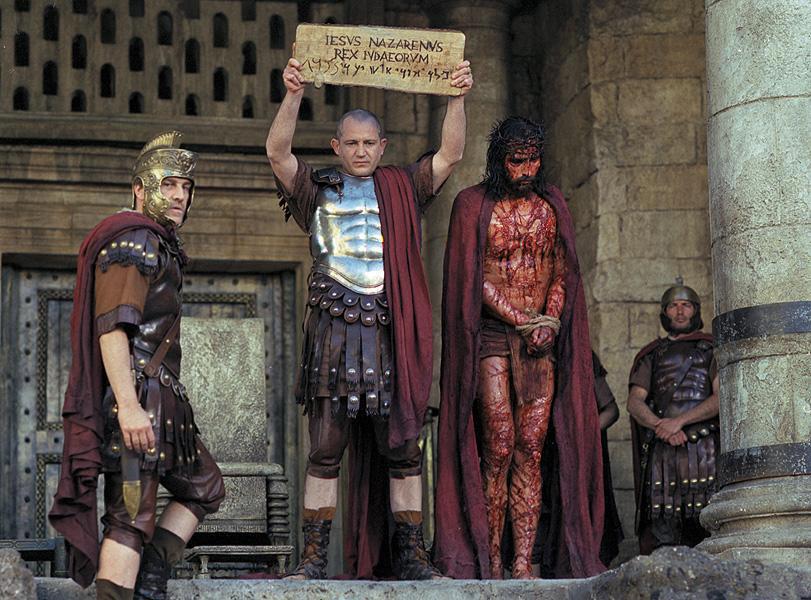
Rock (Lithostrotos) where Jesus was judged


Pilate


Massive Challenge to Standard Geography of Jerusalem – Temple

Part Four:

Dr. Ernest L. Martin on the Lithostrotos

  
“Later, in the time of the Piacensa Pilgrim from Italy … this “Praetorium” had
a singular feature that was honored by the Christians. It was an “oblong Rock”
on which Jesus stood when he was judged by Pilate”.
Ernest Martin
 
Lithostrotos (Greek) or Gabbatha (Hebrew)
 
According to Abarim Publications:
“The name Gabbatha occurs only once in the Bible. It’s the name of the location where Pontius Pilate had his judgment seat, also known as Lithostrotos, meaning stone-strewn (John 19:13). Pilate tried to reason with the Jews with the objective to let Jesus go, but was left little choice when they began to evoke Caesar’s sovereignty. It was from Gabbatha that Pilate delivered Jesus to be crucified (John 19:16)”.
 
Dr. Ernest L. Martin referred several times to the “Stone Pavement”, or Lithostrotos, when he wrote an answer to Dutch-born archaeological architect Dr. Leen Ritmeyer (“A Critique by
Dr. Leen Ritmeyer. Rebuttal by Dr. Martin”).
I (Damien Mackey) do not necessarily accept the following AD dates or supposed associated history as provided below by Dr. Martin:
….
Josephus said the Temple of Herod was built high up on a platform that had four walls around it forming a precise square of 600 feet on each side. This description in no way fits the dimensions of the Haram [esh-Sharif]. Josephus said the wall of its southeast corner had its foundations directly in the deepest part of the Kidron Valley (in the streambed itself) and that its height was 300 cubits (450 feet, or about the height of a modern 40 story building). Near the northwest corner Josephus said this external Temple wall was connected to Fort Antonia by two side-by-side colonnade roadways (each 600 feet long). Josephus then said that Fort Antonia itself was built around a notable “Rock” that was viewed as the centerpiece feature of the interior of the Fort (which was also known as the Praetorium). This well-recognized “Rock” in the Praetorium around which Fort Antonia was built was called the lithostrotos in the Gospel of John (19:13) and Christ stood on it when judged by Pilate. Josephus said that Antonia’s size was much larger than the Temple (he described Fort Antonia as the size of a city and it contained a full legion of Roman troops with many open spaces for military exercises and training). Fort Antonia was so large that Josephus said it obscured the whole of the Temple square from the north. These plain and simple descriptions made by Josephus are depicted in the drawing that Ritmeyer dislikes and they are in precise accord with what Josephus (as an eyewitness) states in the clearest of language.
 
Another eyewitness account was given by Aristeas in 285 B.C. He said the Temple at Jerusalem had within its precincts a natural spring of water, and Tacitus the Roman historian in 100 A.D. also mentioned this inexhaustible spring that was located within the walls of the Temple just before its destruction by the Romans. In my replication in BAR, the professional artist was able to comfortably fit the 600 feet square Temple with its 40 stories high platform as being located over the Gihon Spring (the only spring of water in Jerusalem within a radius of five miles). It was also simple and very logical to show the two colonnade roadways near the northwest angle of the external Temple wall extending a further 600 feet northward to intersect with the southwest corner of Fort Antonia. All geographical features mentioned by Josephus, and incorporating the eyewitness account of Aristeas, and the statement of Tacitus (and by other eyewitness accounts that I have recorded in my book “The Temples that Jerusalem Forgot”) fit precisely into place as shown by Josephus. To be sure of the truthfulness of the drawing, the artist reviewed the latest editions of Josephus’ literary works to scrutinize each geographical feature in a precise way. It took a month of fine detailed research to come up with the final drawing. This drawing is accurate. Since that time (four years ago), numerous scholars have painstakingly gone through those geographical details given by Josephus (which I would ask Ritmeyer to do) and they have come to the identical evaluation that is displayed in the drawing in BAR that Ritmeyer finds offensive.
In the drawing we are only reproducing what Josephus stated with utmost precision. Ritmeyer knows of these profound differences in all points but dismisses them by stating that Josephus was wrong in what he stated.
 
The truth is, Josephus was describing a different building not even associated in a geographical sense with the area of the Haram esh-Sharif.
 
This is a sad commentary on the state of archaeological appraisal on these matters. It is time to accept Josephus’s descriptions exactly! I challenge anyone to read what Josephus wrote (along with the other eyewitnesses) and honest scholars will admit that what is shown in the drawing will be vindicated. What irritates Ritmeyer is the fact that this description of Josephus cannot show the Temple to be located inside the Haram esh-Sharif where he wants it to be. The true placement of the Temple (as the historical eyewitnesses state) is over the Gihon Spring that is about 1000 feet south of the Dome of the Rock that was built over the present centerpiece “Rock” of the Haram esh-Sharif. Indeed, if one would simply accept Josephus’ description of the Temple (with his plain and simple measurements) and then position the Temple over the Dome of the Rock where Ritmeyer demands, one would witness a square building 40 stories high with the platform of the Temple higher in elevation than the summit of the Mount of Olives! Ouch! Also, if Josephus’ Temple is placed within the Haram, the southeastern corner wall of the Temple would NOT be in the center of the streambed of the Kidron Valley as Josephus clearly attests it was. It would be on the level part of the ridge and not even near the edge of the Kidron precipice.
 
In fact, if Josephus’ measurements of the Temple and his basic description of it were accepted by all reasonable people (as they should be), to place the Temple within the Haram esh-Sharif that Ritmeyer insists is proper would make a platform so high that no one from the Mount of Olives could look down into its courts as was an essential part of Temple rituals. On the other hand, let the whole of the Haram to be reckoned as Fort Antonia (which it was), then we still witness Antonia’s four mammoth walls constructed over and around a notable “Rock” outcropping that Josephus said was the outstanding feature around which Fort Antonia was built. Without doubt, the Haram was Fort Antonia.
….
 
The word “Praetorium” was often synonymous in meaning to a fort or an encampment (i.e. Fort Antonia).
 
Later, in the time of the Piacensa Pilgrim from Italy (sixth century) this “Praetorium” had a singular feature that was honored by the Christians. It was an “oblong Rock” on which Jesus stood when he was judged by Pilate. The footprints of Jesus were supposed to have been found in that Rock. A major Church called the Church of the Holy Wisdom had been built over the “oblong Rock” and remained there until the Persians destroyed the church in 614 A.D.
 
Then in 692 A.D., the Sixth Caliph, Abn el-Malik, built the Dome of the Rock over this “oblong Rock.” As late as the time of Saladin in the period of the Crusades, the court recorder of Saladin wrote that that “Rock” under the Dome of the Rock was the same “Rock” that always had the footprints of Jesus embedded on it that were left there when Pilate judged Jesus in the Praetorium (or, Fort Antonia). So, as late as the Crusades, it was known that the “Rock” under the Dome of the Rock was the lithostrotos (the structured Rock) mentioned in the Gospel of John (19:13) where Jesus stood at his judgment by Pilate. This evidence proves positively that throughout all the historical periods up to the Crusades it was recognized that the Dome of the Rock area in the Haram esh-Sharif was indeed the site of Fort Antonia, and NOT the Temple. ….

Wednesday, March 6, 2019

Crucifix a compass for life: Pope Francis


When Is Ash Wednesday This Year? 2019 Holiday Observance
  •  
  • ROME – After chastising rock sensations Queen and Florence + The Machine during this year’s Lenten message for promoting “untrammeled desires,” Pope Francis Wednesday kicked off the penitential season by striking a different chord, this time channeling his inner Kerry Livgren, the legendary songwriter behind the 1977 hit by Kansas “Dust in the Wind.”
    In the last verse of the song, the lyrics tell listeners “don’t hang on, nothing lasts forever but the earth and sky/It slips away/And all your money won’t another minute buy/Dust in the wind/All we are is dust in the wind.”
    Francis essentially made those words his own during his Ash Wednesday Mass opening the 40-day Lenten season, which promotes prayer and penance in commemoration of the 40 days Jesus spent in the desert being tempted by the devil before starting his public ministry.
    Earthly pleasures fade ‘like dust in the wind,’ pope says launching Lent
    Pope Francis is pictured with ashes on his forehead during Ash Wednesday Mass at the Basilica of Santa Sabina in Rome Feb. 14. (Credit: CNS photo/Paul Haring.)
    In his homily, Francis noted how Mass-goers are marked with ashes on their foreheads as a sign of their earthly mortality, saying the gesture is a symbol “that causes us to consider what occupies our mind.”
    “Our thoughts often focus on transient things, which come and go,” he said, calling the ash “a subtle yet real reminder that of the many things occupying our thoughts…nothing will remain. No matter how hard we work, we will take no wealth with us from this life.”
    “Earthly realities fade away like dust in the wind,” he said. “Possessions are temporary, power passes, success wanes. The culture of appearance prevalent today, which persuades us to live for passing things, is a great deception.”
    Like a fire, once these things end, “only ash remains,” he said, adding that Lent is a time “to free ourselves from the illusion of chasing after dust.”
    Francis celebrated Mass at Rome’s Basilica of Santa Sabina, the mother church of the Dominican order, after leading a brief prayer and procession from the church of Saint Anselm, which plays the same role for the Benedictines.
    Lent, he said, is a time to rediscover one’s direction in life, which should lead to the Lord, who in the day’s readings urges Christians to “return to me.”
    On the journey, the day’s Gospel reading from Matthew offers three proposals to undertake “without hypocrisy or pretense,” and these, he said, are the typical Lenten practices of prayer, fasting and almsgiving.
    “Almsgiving, prayer and fasting bring us back to the three realities that do not fade away,” he said, explaining that while prayer reunites a person with God, charity reunites them to others and fasting is directed toward oneself.
    Lent, he said, is an invitation to focus on God and it also “invites us to look inside our heart, with fasting, which frees us from attachment to things and from the worldliness that numbs the heart.”
    Living for things such as outward appearance, money, a career or a hobby turns these things into idols “that enslave us, sirens that charm us and then cast us adrift.” However, if the heart is attached to things that don’t fade away, “we rediscover ourselves and are set free,” the pope said.
    Calling the Crucifix a “compass” for life, Francis urged Catholics to focus on the image of Jesus crucified during Lent, saying his “loving self-emptying show us the necessity of a simpler life, free from anxiety about things.”
    “We need to free ourselves from the clutches of consumerism and the snares of selfishness, from always wanting more, from never being satisfied, and from a heart closed to the needs of the poor,” he said, adding that while this is not easy to do, it allows Christians to reach their ultimate goal.
    Reminding attendees that while Lent begins with ashes, it ends with the fire lit on Easter night celebrating the resurrection of Jesus from the dead.
    “Jesus does not turn to ashes, but rises gloriously,” Francis said, adding that “this is true also for us, who are dust. If we, with our weaknesses, return to the Lord, if we take the path of love, then we will embrace the life that never ends. And we will be full of joy.”
     

    Thursday, February 28, 2019

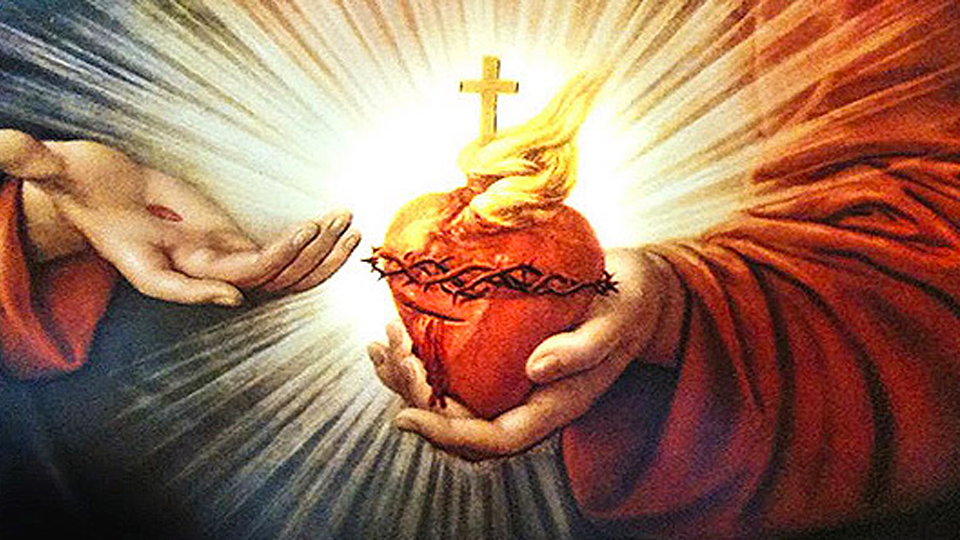
    Vital devotions to the Sacred Heart of Jesus


    Image result for sacred heart of jesus


    Enthronement of the Sacred Heart at home,
    and the Nine First Fridays of Reparation.
     
     
    Philip Kosloski of Aleteia lays it out at:
     

    5 Things Catholics Should Know About First Fridays


    Learn about devotion to the Sacred Heart of Jesus and the graces that come from observing First Fridays

     
    It is no wonder, therefore, that our predecessors have constantly defended this most approved form of devotion — the pious devotion of the faithful toward the Most Sacred Heart of Jesus [and] the custom of receiving Holy Communion on the first Friday of every month at the desire of Christ Jesus, a custom which now prevails everywhere.—Pope Pius XI Miserentissimus Redemptor
     
    What’s so special about First Fridays?
     
    Our parents grew up going to church every First Friday of the month and taking part in Sacred Heart devotions, but in recent decades the pious practice has fallen out of practice, and is dismissed by some as an “old-fashioned” anachronism.
    A main reason for the decline in interest in this devotion is probably rooted in simple ignorance: people don’t know what First Fridays are all about; families and parishes may not have adequately passed down their importance to the next generation. Here are five things to know.
     
    1. How did the First Friday Devotion begin?
     
    While some saints referenced the Heart of Jesus in their writings even centuries earlier, in 1673, a French Visitandine (Visitation) nun named Margaret Mary Alacoque had visions of Jesus, wherein he asked the Church to honor His Most Sacred Heart. In particular, Jesus asked the faithful to “receive Communion on the First Fridays, for nine consecutive months.” The request was connected to a specific promise made to all who venerated and promoted devotion to the Sacred Heart. After Margaret Mary’s death, the First Friday practice steadily spread in the Church — endorsed by popes and promoted by saints — but it greatly increased in popularity when Margaret Mary was canonized a saint in 1920 by Pope Benedict XV.


    2. Why nine consecutive months?
     
    The number nine is traditionally associated with a novena and finds its origin in the nine days that the apostles spent in prayer before Pentecost. A novena provides an extended amount of time for preparation and interior renewal.
     
    3. What am I supposed to do on First Fridays?
     
    Go to Mass and receive Holy Communion with the intention of honoring Christ’s Sacred Heart. If you are not in a state of grace, and thus unable to receive, you will also need to go to confession.
     
    4. What are the “promises” connected to this devotion?
     
    Jesus said to St. Margaret Mary, “In the excess of the mercy of my heart, I promise you that my all powerful love will grant to all those who will receive communion on the First Fridays, for nine consecutive months, the grace of final repentance: they will not die in my displeasure, nor without receiving the sacraments; and my heart will be their secure refuge in that last hour.” This means that if a person faithfully receives communion for nine consecutive months on First Fridays, Jesus will grant that person extra graces at the time of their death, making it possible to repent of their sins and receive the last rites (if needed).
    This promise is the last of 12 promises connected to the Devotion to the Sacred Heart, particularly attached to the Enthronement of the Sacred Heart in one’s home:
     
    (1) I will give them all the graces necessary in their state of life.
    (2) I will establish peace in their homes.
    (3) I will comfort them in all their afflictions.
    (4) I will be their secure refuge during life, and above all, in death.
    (5) I will bestow abundant blessings upon all their undertakings.
    (6) Sinners will find in my heart the source and infinite ocean of mercy.
    (7) Lukewarm souls shall become fervent.
    (8) Fervent souls shall quickly mount to high perfection.
    (9) I will bless every place in which an image of my heart is exposed and honored.
    10) I will give to priests the gift of touching the most hardened hearts.
    (11) Those who shall promote this devotion shall have their names written in my Heart.
    (12) I promise you in the excessive mercy of my Heart that my all-powerful love will grant to all those who receive Holy Communion on the First Fridays in nine consecutive months the grace of final perseverance; they shall not die in my disgrace, nor without receiving their sacraments. My divine heart shall be their safe refuge in this last moment.
     
    5. Are the First Fridays a “ticket” to heaven?
     
    It is not as simple as going to Mass for nine months and then clocking out, never going to Mass again and leading a sinful life! The entire purpose of this devotion is to draw a person closer to the heart of Christ. If a person fulfills these obligations with sincere faith, it is natural for he or she to be closer to God and better prepared for death. The moment that this devotion is observed in a superstitious manner, neglecting the need to live a virtuous life, all bets are off and Jesus’ promise is null and void.
    Jesus wants us to rest on his heart, like St. John, and the First Friday devotion is an opportunity for us to encounter him more than just on Sundays and to deepen our love of him.
    Coming to know, love and trust that we may take rest in the Sacred Heart of Jesus, and place our anxieties within, is what the First Fridays are all about.
     
    [Editor’s Note: Take the Poll – Do You Still Celebrate First Fridays?]


    1st (Friday) March, 2019

    Monday, February 4, 2019

    Location of Arimathea and the "Resurrection Tomb Mystery"


    Meanwhile, Richard Bauckham, who was consulted for the documentary but has drawn very different conclusions about the tomb, has detailed no less than 13 possible readings for the inscription which James Tabor reads as ‘O Divine Jehovah, raise up, raise up’.


    The following blog, christianevidence, gives this rather negative view of the controversial documentary of 2012, The Resurrection Tomb Mystery:
    http://christianevidence.org/images/ces_media/grid/spacer_10.gif
    Posted: 16 April 2012
    On the Thursday before Good Friday this year, the Discovery Channel screened a documentary, The Resurrection Tomb Mystery, claiming to reveal the earliest evidence for belief in the resurrection of Jesus. The documentary was about a sealed 1st century tomb found in Talpiyot, a suburb of Jerusalem, which contains ossuaries, or bones boxes.
     
    Working with a camera mounted on a robotic arm, the filmmakers found an image on one of the boxes which biblical historian James Tabor believes is of the great fish in the story of Jonah. The early Christians used the story of Jonah, who was swallowed by the fish but later escaped from it, as a parable for the death and resurrection of Jesus.
    Another of the boxes has an inscription which, according to James Tabor, says something like: ‘O Divine Jehovah, raise up, raise up’. Tabor, who is at the University of North Carolina, says he is 95 per cent certain in linking the image and inscription with Jesus.
     
    Simcha Jacobovici, who produced the documentary, also made The Lost Tomb of Jesus in 2007, claiming that another tomb, just 200 metres from the ‘Resurrection’ tomb, contained the bones of Jesus and some of his earliest followers, including Mary Magdalene. That tomb also contained a number of bone boxes, but the Da Vinci Code-like conclusions drawn by the documentary were ridiculed by archaeologists who were involved in excavating the tomb.
    This time round, The Resurrection Tomb Mystery has generated huge debate and disagreement on academic blogs around the world. Robert Cargill, of the University of Iowa, has demonstrated that the image of the ‘great fish’ has been clumsily Photoshopped for the documentary to make it more fish-like. At the time of writing, Simcha Jacobovici and James Tabor have yet to admit that the image has been manipulated. Robert Cargill and other scholars believe the image is much more likely to be an amphora, or storage jar.
     
    Meanwhile, Richard Bauckham, who was consulted for the documentary but has drawn very different conclusions about the tomb, has detailed no less than 13 possible readings for the inscription which James Tabor reads as ‘O Divine Jehovah, raise up, raise up’. Most of them have no resurrection theme. One of them reads, ‘Here are my bones. I, Agabus, crumble not away’.
     
    Mark Goodacre of Duke University, North Carolina, who live blogged the screening of the documentary, said, ‘I was surprised to see… just how weak the attempts to link the tomb to Jesus appeared.’
    [End of quote]
     
    Richard Bauckham clarifies the situation in NT blog, in an article that also provides the location for the biblical town of Arimathea in connection with 1 Maccabees:


    Joseph of Arimathea and Talpiyot Tomb B, by Richard Bauckham

     
    I am delighted  to have the opportunity to blog the following guest post from Prof. Richard Bauckham.  It is also available as a PDF file here.
     
    Joseph of Arimathea and Talpiyot Tomb B
     
    Richard Bauckham
     
    The “Resurrection Tomb Mystery” documentary attempts to suggest that Talpiyot Tomb B was the tomb of Joseph of Arimathea. Hardly any evidence for this is actually provided. The only point at which some reason for the identification is given is this:
     
    “The two [Talpiyot] tombs were found on what had been in the first century a rich man’s estate, complete with wine press and ritual bath. And the area is dominated by two hills. Joseph of Arimathea was a rich man and his name, in Hebrew, means ‘Two Hills.’”
     
    This comment obviously depends on the usual explanation of Arimathea as representing the Hebrew place name Ramathaim (1 Sam 1:1), and correctly notices that this is a dual form of the word ramah. The latter means ‘height’ but is scarcely used except in place-names, either alone, as Ramah (there are 4 or 5 towns so-called in the Hebrew Bible), or in compounds, such as Ramoth-Gilead. In such cases, it designates a town built on a high place. For the Arimathea/Ramathaim from which Joseph is named, there needs to be a town, not just an estate ‘dominated by two hills’.
    That there was a town, or even small village, called Ramathaim, so close to Jerusalem but mentioned nowhere else in our sources, seems unlikely.
     
    The most likely identification of Joseph’s place of origin is with the Ramathaim (textual variant: Rathamin) mentioned in 1 Macc 11:34 as the headquarters of a toparchy transferred in 145 BCE from Samaria to Judea. This Ramathaim is clearly not near Jerusalem, but near the borders of Judaea and Samaria. Eusebius’s Onomasticon places it at the village of Remphis (Israel map grid 151159), which is about 30 km north-west of Jerusalem. It should be noticed that the dual form of Ramathaim is an archaic form, which has survived unusually in this place name (otherwise only in 1 Sam 1:1, which may refer to the same place, evidently called Ramah later in the narrative of I Samuel). It is therefore very distinctive (unlike the common Ramah) and we should not multiply Ramathaims unnecessarily.
     
    The makers of the documentary perhaps assume that, since Joseph appears in the Gospel narratives in Jerusalem and has a tomb near the city, Arimathea must be near Jerusalem. But this is a mistake. Like many aristocrats in the ancient world, Joseph had estates in the country (not necessarily at all near Jerusalem) but lived most of the time in the city. This is the most obvious way of explaining why he has a new tomb, not yet occupied, near Jerusalem. His aristocratic family would surely already have a tomb – back in Arimathea. But Joseph has decided that he would like to be buried near the holy city, rather than having his body transported back to Arimathea. We now have a nice parallel in the case of the Caiaphas family, another aristocratic Jerusalem family. They had the now well-known tomb in north Talpiyot, where the high priest Caiaphas himself was interred, together with other family members. But from the ossuary inscription that was made known to the public only last year (the ossuary of Mariam daughter of Yeshua of the Caiaphas family), we now know that there was also a family tomb elsewhere, somewhere in the vicinity of the Elah valley (where the ossuary is said to have been found), plausibly at Khirbet Qeiyafa. This will have been where the family estates were located. (See my article, ‘The Caiaphas Family,’ JSJH 10 [2012] 3-31.)
     
    So the only shred of evidence presented in the documentary for identifying Talpiyot Tomb B as that of Joseph of Arimathea is entirely without value.
     
    Image result for st joseph of arimathea