Thursday, July 31, 2025

St. Cardinal John Henry Newman to be made a Doctor of the Church

Lead, Kindly Light by John Henry Newman (1834) Lead, Kindly Light, amid the encircling gloom, Lead Thou me on; The night is dark, and I am far from home, Lead Thou me on. Keep Thou my feet; I do not ask to see the distant scene; one step enough for me. I was not ever thus, nor prayed that Thou shouldst lead me on; I loved to choose and see my path; but now Lead Thou me on. I loved the garish day, and, spite of fears, pride ruled my will; remember not past years. So long Thy power hath blessed me, sure it still Will lead me on. O'er moor and fen, o'er crag and torrent, till The night is gone; And with the morn those angel faces smile, Which I have loved long since, and lost awhile. Fr. Juan Velez has written (2025): https://www.cardinaljohnhenrynewman.com/st-john-henry-newman-to-be-declared-a-doctor-of-the-church/ St. John Henry Newman to be Declared a Doctor of the Church Today, July 31, 2025, the Vatican published the wonderful news that Pope Leo XIV has approved the future declaration of St. John Henry Newman as doctor of the Church. We are delighted with this news and wanted to share with you even if you learned about it earlier today. We have already posted some blog posts on this topic and will soon publish others. Today we wanted to share the news with you and ask to invite friends to give thanks to God for this news and to follow our weekly podcasts. Here is a link to the news from the Vatican webpage and some words by the journalist Alexandro Carolis: “One of the great modern thinkers of Christianity, a key figure in a spiritual and human journey that left a profound mark on the Church and 19th-century ecumenism, and the author of writings that show how living the faith is a daily “heart-to-heart” dialogue with Christ. A life spent with energy and passion for the Gospel—culminating in his canonization in 2019—that will soon lead to the English cardinal John Henry Newman being proclaimed a Doctor of the Church. The news was announced today, July 31, in a statement from the Holy See Press Office, which reported that during an audience granted to Cardinal Marcello Semeraro, Prefect of the Dicastery for the Causes of Saints, Pope Leo XIV has “confirmed the affirmative opinion of the Plenary Session of Cardinals and Bishops, Members of the Dicastery for the Causes of Saints, regarding the title of Doctor of the Universal Church, which will soon be conferred on Saint John Henry Newman”. The saints give glory to God and teach us how to live as God’s children. We rejoice with the upcoming declaration of Newman as doctor of the Church. …. We read this by Dr. Samuel Gregg, at: https://www.catholicworldreport.com/2025/07/31/john-henry-newmans-long-war-on-liberalism/ John Henry Newman’s long war on liberalism Saint John Henry Newman’s devastating critique of liberal religion remains even more relevant in our own time. Editor’s note: This article was originally posted on July 30, 2017, and is reposted today to mark the news that Newman has been named a Doctor of the Church by Pope Leo XIV. There is truly nothing new under the sun. That’s the pedestrian conclusion at which I arrived after recently re-reading the address given by one of the nineteenth century’s greatest theologians, Saint John Henry Newman, when Pope Leo XIII made him a cardinal on May 12, 1879. Known as the Biglietto Speech (after the formal letter given to cardinals on such occasions), its 1720 words constitute a systematic indictment of what Newman called that “one great mischief” against which he had set his face “from the first.” Today, I suspect, the sheer force of Newman’s critique of what he called “liberalism in religion” would make him persona non grata in most Northern European theology faculties. When reflecting upon Newman’s remarks, it’s hard not to notice how much of the Christian world in the West has drifted in the directions against which he warned. Under the banner of “liberalism in religion,” Newman listed several propositions. These included (1) “the doctrine that there is no positive truth in religion,” (2) “that one creed is as good as another,” (3) that no religion can be recognized as true for “all are matter of opinion,” (4) that “revealed religion is not a truth, but a sentiment and a taste; not an objective faith, not miraculous,” and (5) “it is the right of each individual to make it say just what strikes his fancy.” Can anyone doubt that such ideas are widespread today among some Christians? Exhibit A is the rapidly collapsing liberal Protestant confessions. Another instance is that a fair number of Catholic clergy and laity of a certain age who shy away from the word “truth” and who regard any doctrine that conflicts with the post-1960s Western world’s expectations as far from settled. Yet Newman’s description of liberal religion also accurately summarizes the essentially secular I’m-spiritual-not-religious mindset. At the time, the directness of Newman’s assault on liberal religion surprised people. It wasn’t for idle reasons that the speech was reprinted in full in The London Times on 13 May, and then translated into Italian so that it could appear in the Holy See’s newspaper L’Osservatore Romano on 14 May. Everyone recognized that Newman’s words were of immense significance. The newly minted cardinal had hitherto been seen as someone ill at ease with the Church’s direction during Pius IX’s pontificate. Newman’s apprehensions about the opportuneness of the First Vatican Council formally defining papal infallibility was well known. Not well-understood was that concerns about Catholics being misled into thinking they must assent to a pope’s firm belief that, for example, the optimal upper-tax rate is 25.63 percent, didn’t mean that you regarded religious belief as a type of theological smorgasbord. Those who had followed the trajectory of Newman’s thought over the previous fifty years would have recognized that the Biglietto Speech harkened back to a younger Newman and a consistent record of fierce opposition to liberal religion. In 1848, for instance, Newman had lampooned liberal religion in his novel Loss and Gain (1848). One character in the book, the Dean of Nottingham, is portrayed as someone who believes that “there was no truth or falsehood in received dogmas of theology; that they were modes, neither good nor bad in themselves, but personal, national, or periodic.” Such opinions mirror the views of those today who primarily regard Scripture, the Church, and Christian faith as essentially human historical constructs: a notion that invariably goes hand-in-hand with a barely disguised insistence that the Church always requires wholesale adaptation to whatever happens to be the zeitgeist. The end result is chronic doctrinal instability (and thus incoherence) and the degeneration of churches into mere NGO-ism: precisely the situation which characterizes contemporary Catholicism in the German-speaking world. Another of the novel’s characters is Mr. Batts, the director of the Truth Society. This organization is founded on two principles. First, it is uncertain whether truth exists. Second, it is certain that it cannot be found. Welcome to the world of philosophical skepticism, which, Newman understood, is based on the contradiction of holding that we know the truth that humans really cannot know truth. Newman’s antagonism towards liberal religion, however, also reflected another side of his thought that, I suspect, some today would also prefer to ignore. This concerns Newman’s critical view of liberalism as a social philosophy. Newman was fully aware of the ambiguity surrounding terms like “conservatism” and “liberalism.” In his Apologia Pro Sua Vita (1864), Newman specified that his criticism of liberalism shouldn’t be interpreted as slighting French Catholics such as Charles de Montalembert and the Dominican priest Henri-Dominique Lacordaire—“two men whom I so highly admire”—who embraced the liberal label but in the context of post-Revolutionary France: a world which differed greatly from the Oxford and England of Newman’s time. We get closer to the “liberalism” against which Newman protested when we consider a letter to his mother dated 13 March 1829. Here Newman condemns, among others, “the Utilitarians” and “useful knowledge men” whose ideas were propagated by philosophical Radical periodicals such as the Westminster Review. These beliefs and publications were clearly associated with utilitarian thinkers and political radicals such as Jeremy Bentham (the Westminster Review’s founder), James Mill, and, later, John Stuart Mill. In this sense, liberalism was Newman’s way of describing what we today call doctrinaire secularism. This is borne out by the Biglietto Speech’s portrayal of a society’s fate as it gradually abandons its Christian character, invariably at the behest of those Newman calls “Philosophers and Politicians.” Newman begins by referencing their imposition of “a universal and a thoroughly secular education, calculated to bring home to every individual that to be orderly, industrious, and sober, is his personal interest.” Recognizing, however, that utility, pragmatism, and self-interest aren’t enough to glue society together, liberals promote, according to Newman, an alternative to revealed religion. This, he says, is made up of an amalgam of “broad fundamental ethical truths, of justice, benevolence, veracity, and the like; proved experience; and those natural laws which exist and act spontaneously in society, and in social matters, whether physical or psychological; for instance, in government, trade, finance, sanitary experiments, and the intercourse of nations.” But while liberals uphold this mixture of particular moral principles, matter-of-factness and science, Newman points out that they simultaneously insist that religion is “a private luxury, which a man may have if he will; but which of course he must pay for, and which he must not obtrude upon others, or indulge in to their annoyance.” It’s not, Newman says, that things like “the precepts of justice, truthfulness, sobriety, self-command, benevolence,” etc. are bad in themselves. In fact, Newman adds, “there is much in the liberalistic theory which is good and true.” Nor did Newman adopt an “anti-science” view at a time when some Christians worried about how to reconcile the Scriptures with the tremendous expansion in knowledge of the natural world which marked the nineteenth century. Newman wasn’t, for example, especially troubled by Darwin’s Origin of the Species. As he wrote to the biologist and Catholic convert St George Jackson Mivart in 1871, “you must not suppose I have personally any great dislike or dread of his theory.” What Newman opposed was a problem with which we are all too familiar today. This consists of (1) absolutizing the natural sciences as the only objective form of knowledge and (2) using the empirical method to answer theological and moral questions that the natural sciences cannot answer. In such cases, Newman wrote in his Idea of a University (1852), “they exceed their proper bounds, and intrude where they have no right.” It also fosters a mentality which has seeped into the minds of those Christians who prioritize sociology, psychology, opinion polls, and what they imagine to be the “established scientific position” when discussing what the Catholic position on any subject should be. More generally, Newman argued that it’s precisely because these principles are unobjectionable in themselves that they become dangerous when liberals include them in the “array of principles” they use “to supersede, to block out, religion.” In these circumstances, those who maintain that religion, in the sense of divinely revealed truths about God and man, cannot be relegated to the status of football teams competing in a private league are dismissed as unreasonable, intolerant, lacking benevolence, unscientific, and reflective of (to use the curious words employed in a L’Osservatore Romano opinion piece) a “modest cultural level.” In a word—illiberal. Newman well understood the ultimate stakes involved in the advance of liberal religion and the nihilism it concealed under a veneer of progressive Western European bourgeois morality. It was nothing less, he said, than “the ruin of many souls.” For Newman, there was always the serious possibility that error at the level of belief can contribute to people making the type of free choices that lead to the eternal separation from God we call hell. The good news is that Newman had “no fear at all that [liberal religion] can really do aught of serious harm to the Word of God, to Holy Church.” For Newman, the Church was essentially indestructible. That didn’t mean it would be free of disputation or disruption. Newman himself spent his life immersed in theological controversies. But Newman’s deep knowledge of the Church Fathers made him conscious that orthodoxy had been under assault since Christianity’s earliest centuries. Newman believed, however, in Christ’s promises to his Church. Moreover, Newman ended his Biglietto Speech by stating that “what is commonly a great surprise” is “the particular mode by which . . . Providence rescues and saves his elect inheritance.” Even in times where serious theological and moral error seems rampant, God raises up courageous bishops and priests, clear-thinking popes, new religious orders and movements, lay people who reject liberal Christianity’s mediocrity and soft nihilism, and, above all, great saints and martyrs. Against such things, Newman knew—and we should have confidence—liberal religion doesn’t have a chance.

Wednesday, July 30, 2025

Mithras myth, since probably based on Jesus, could not have influenced Christianity

by Damien F. Mackey “Much of what is presumed about Mithras comes from ancient, caption-less pictures and murals, so the vast majority of scholarly work on Mithras is pure speculation.” Bruce Cooper Unsurprisingly, after the extraordinary life of Jesus Christ on earth, there emerged mythological or semi-fictitious figures whose stories were based on Him. One of the most celebrated of these was Apollonius of Tyana of whom I have written: Apollonius of Tyana, like Philo, a fiction (6) Apollonius of Tyana, like Philo, a fiction To the emperor Vespasian, a genuine historical person, there were fitted legends that clearly borrowed from the earlier Jesus Christ: Vespasian ‘becoming a god’ (6) Vespasian 'becoming a god' “Now, here we have Vespasian, a late contemporary of Jesus Christ by any estimate, and afflicted with dysentery no less, being re-cast by modern writers as a miracle-working messiah from whose life the Evangelists supposedly compiled their respective portraits of the true Messiah, Jesus Christ”. Even an early fictitious entity, such as: Buddha partly based on Moses (6) Buddha partly based on Moses had Gospel elements added to his evolving story. Thus, as listed by Bashir Ahmad Orchard (1990): https://www.alislam.org/articles/buddha-jesus/ 1. Jesus was born of a virgin without carnal intercourse. (Matth. Chapter 1) – Buddha was born of a virgin without carnal intercourse. (Hinduism by Williams, pp. 82 and 108) 2. When Jesus was an infant in his cradle, he spoke to his mother and said: I am Jesus, the son of God. (Gospel of Infancy) – When Buddha was an infant, just born, he spoke to his mother and said: I am the greatest among men. (Hardy’s Manual of Buddhism, pp. 145-6) 3. The life of Jesus was threatened by King Herod. (Matth. 2:1) – The life of Buddha was threatened by King Bimbarasa. (History of Buddha by Beal pp. 103-104) 4. When Jesus was a young boy we are told that the learned religious teachers were astonished at his understanding and answers. (Luke 2:47) – When sent to school, the young Buddha surprised his masters. (Hardy’s Manual of Buddhism) 5. Jesus fasted for forty days and nights. (Matth. 4:2) – Buddha fasted for a long period. (Science of Religion by Muller, p 28) 6. It is believed that Jesus will return to this world. (Acts 1:11) – It is believed that Buddha will return to this world. (Angel-Messiah by Bunsen, Ch. 14) 7. Jesus said: Think not that I am come to destroy the law, or the prophets; I am not to destroy but to fulfill. (Matth. 5:17) – Buddha came not to destroy the law but to fulfill it. (Science of Religion by Muller, p 140) 8. Jesus taught: Love your enemies, bless them that curse you, do good to them that hate you. (Matth. 5:44) – According to Buddha, the motive of all our actions should be pity, or love for our neighbour. (Science of Religion by Muller, p 249) 9. It is recorded certain of the scribes and pharisees answered, saying, Master we would see a sign from thee. (Matth. 12:38) – It is recorded in the Sacred Canon of the Buddhists that the multitude required a sign from Buddha that they might believe. (Science of Religion by Muller, p 27) 10. It is written in the New Testament that Jesus said: If thy right eye offend thee, pluck it out, and caste it from thee. (Matth. 5:29) – A story is related of a Buddhist ascetic whose eye offended him so he plucked it out and threw it away. (Science of Religion by Muller, p 245) Mohammed follows the same pattern. Essentially arising from the Old Testament, he will ascend into Heaven from Jerusalem (and so on) as Jesus did at the end of his earthly life. On the archaeologico-historical falsity of, not only Mohammed, but also the early Caliphates, see e.g. my article: Let’s not rush into accepting the rash tradition of Islamic Rashidun imperial conquest (6) Let’s not rush into accepting the rash tradition of Islamic Rashidun imperial conquest Mithras (Mithra), a complete fiction like Apollonius of Tyana, is yet supposed by some to have influenced Jesus Christ and the Gospels, as is said of the real Vespasian (2017). Bruce Cooper has well written on this erroneous state of affairs: https://bcooper.ca/2017/10/06/the-roman-god-mithras/ The Roman God Mithras I’ve been listening to a podcast with J. Warner and Susie Wallace where they are discussing why it is that young people are leaving the church. You can listen to it here. I do encourage you to listen to it because it will give you a better appreciation of the repost below and what both Jim and Susie are talking about, the need for evidential facts that support Christianity to be available for our youth, is a reality that cannot be over emphasized. Not only is the need urgent for our youth but in fact, for every Christian, regardless of their age. In the podcast Jim speaks about how a young Christian reacted when she was basically setup by an Atheist that had been invited to speak to their group. The setup had to do with the “supposed” background similarity of the Roman/Persian god Mithras and Jesus. As Jim indicates in the podcast, this “similarity” in background is very prevalent on the Internet and the repost below is an excellent example of why it is necessary to do your homework. ________________________________________ Is Jesus Simply a Retelling of the Mithras Mythology? …. Jesus “mythers” claim Mithras was born of a virgin, in a cave, on December 25th, and his birth was attended by shepherds. Mithras was considered a great traveling teacher and master. He had twelve companions (or disciples) and promised his followers immortality. Mithras performed miracles and sacrificed himself for world peace. He was buried in a tomb and after three days rose again. His followers celebrated this event each year at the time of Mithras’ resurrection (and this date later became “Easter”). Mithras was called the “Good Shepherd,” was identified with both the Lamb and the Lion, and was considered to be the “Way, the Truth and the Light,” the “Logos,” the “Redeemer,” the “Savior” and the “Messiah.” His followers celebrated Sunday as His sacred day (also known as the “Lord’s Day,”) and they celebrated a Eucharist or “Lord’s Supper”. Mithras, by this description, sounds a lot like Jesus doesn’t he? Most young Christians discover claims such as these while surfing the Internet or sitting in classes as university students. Atheists like Richard Carrier and David Fitzgerald have written extensively about such comparisons. But while there are a number of pre-Christian mythologies with dying saviors, none are similar to Jesus in any significant way, including the Mithraic mystery religions of Persia and Rome. A significant portion of what we just described about Mithras is simply false. There are two distinct and non-continuous traditions related to Mithras, one coming out of the areas of India and Iran, and another, centuries later in Roman times. Many skeptics have struggled to try to connect these as one continuous tradition, and in so doing, have distorted or misinterpreted the basic elements of the tradition and mythology. Much of what is presumed about Mithras comes from ancient, caption-less pictures and murals, so the vast majority of scholarly work on Mithras is pure speculation. Let’s take a look at the claims we have already described and separate truth from fiction (for another examination of Mithras and many other alleged Christian precursors, please visit David Anderson’s excellent website(currently non-functional). I’ve also done much research on Mithras from the texts listed at the end of this blog post): Claim: Mithras was born of a virgin on December 25th, in a cave, attended by shepherds Truth: Mithras was actually born out of solid rock, leaving a hole in the side of a mountain (presumably described as a “cave”). He was not born of a virgin (unless you consider the rock mountain to have been a virgin). His birth was celebrated on December 25th, but the first Christians knew this was not the true date of Christ’s birth anyway, and both Mithraic worshippers and the early Roman Church borrowed this celebration from earlier winter solstice celebrations. Shepherds are part of Mithraism, witnessing his birth and helping Mithras emerge from the rock, but interestingly, the shepherds exist in the birth chronology at a time when humans are not supposed to have been yet born. This, coupled with the fact the earliest version of this part of the Mithraic mythology emerges one hundred years after the appearance of the New Testament, infers it is far more likely this portion of Mithraism was borrowed from Christianity rather than the other way around. Claim: Mithras was considered a great traveling teacher and master Truth: There is nothing in the Mithraic tradition indicating he was a teacher of any kind, but he was could have been considered a master of sorts. This would not be unexpected of any deity, however. Most mythologies describe their gods in this way. Claim: Mithras had 12 companions or disciples Truth: There is no evidence for any of this in the traditions of Iran or Rome. It is possible the idea Mithras had 12 disciples is simply derived from murals in which Mithras is surrounded by twelve signs and personages of the Zodiac (two of whom are the moon and the sun). Even this imagery is post Christian, and, therefore, did not contribute to the imagery of Christianity (although it could certainly have borrowed from Christianity). Claim: Mithras promised his followers immortality Truth: While there is little evidence for this, it is certainly reasonable to think Mithras might have offered immortality, as this is not uncommon for any God of mythology. Claim: Mithras performed miracles Truth: Of course this is true, as this too was not uncommon for mythological characters. Claim: Mithras sacrificed himself for world peace Truth: There is little or no evidence this is true, although there is a story about Mithras slaying a threatening bull in a heroic deed. But that’s about as close as it gets. Claim: Mithras was buried in a tomb and after three days rose again, and Mithras was celebrated each year at the time of His resurrection (later to become Easter) Truth: There is nothing in the Mithraic tradition indicating he ever even died, let alone resurrected. Tertullian did write about Mithraic believers re-enacting resurrection scenes, but he wrote about this occurring well after New Testament times. Christianity could not, therefore, have borrowed from Mithraic traditions, but the opposite could certainly be true. Claim: Mithras was called “the Good Shepherd”, and was identified with both the Lamb and the Lion Truth: There is no evidence that Mithras was ever called “the Good Shepherd” or identified with a lamb, but since Mithras was a sun-god, there was an association with Leo (the House of the Sun in Babylonian astrology), so one might say he was associated with a Lion. But once again, all of this evidence is actually post New Testament; Mithraic believers may once again have borrowed this attribute from Christianity. Claim: Mithras was considered to be the “Way, the Truth and the Light,” and the “Logos,” “Redeemer,” “Savior” and “Messiah.” Truth: Based on the researched and known historic record of the Mithraic traditions, none of these terms has ever been applied to Mithras with the exception of “mediator”. But this term was used in a very different from how Christians used the term. Mithras was not the mediator between God and man but the mediator between the good and evil gods of Zoroaster. Claim: Mithraic believers celebrated Sunday as Mithras’ sacred day (also known as the “Lord’s Day,”) Truth: This tradition of celebrating Sunday is only true of Mithraic believers in Rome and it is a tradition that dates to post Christian times. Once again, it is more likely to have been borrowed from Christianity than the other way around. Claim: Mithraic believers celebrated a Eucharist or “Lord’s Supper” Truth: Followers of Mithras did not celebrate a Eucharist, but they did celebrate a fellowship meal regularly, just as did many other groups in the Roman world. From this quick examination of the Mithraic comparisons, it should be obvious Mithras isn’t much like Jesus after all. …. J. Warner Wallace is a Cold-Case Detective, a Christian Case Maker, and the author of Cold-Case Christianity and ALIVE

Monday, July 28, 2025

Megiddo Mosaïc documentary

“The fascinating mosaic presents groundbreaking physical evidence of the practices and beliefs of early Christians, including the first archaeological instance of the phrase ‘God Jesus Christ’.” Dr. Yotam Tepper https://www.museumofthebible.org/newsroom/a-new-documentary-explores-one-of-the-greatest-arc A New Documentary Explores One of the Greatest Archaeological Finds of the 21st Century the Megiddo Mosaic WASHINGTON, D.C., February 28, 2025 — Museum of the Bible announces their partnership with Angel Studios and Evolve Studios for the release of the documentary, “The Mosaic Church,” about the discovery of the 1,800-year-old Megiddo Mosaic in Megiddo, Israel. The documentary tells the story of the Megiddo Mosaic, a decorative floor of the oldest-known Christian worship space in history, dated to AD 230, located within a Roman military camp 15 miles southwest of Nazareth. The mosaic was discovered in an excavation by the Israel Antiquities Authority underneath a maximum-security prison and was conserved by the Israel Antiquities Authority in 2005. The mosaic made its world debut at Museum of the Bible in September 2024 and is currently on display in partnership with the Israel Antiquities Authority. “We are thrilled to make this film available for the public and continue to tell the remarkable story of one of the most important archeological discoveries of the 21st century,” said Bobby Duke, chief curatorial officer at Museum of the Bible. “This mosaic is critical for encountering and understanding early Christians at a time when they might have suffered persecution by the Roman Empire. It is a story that must be told.” According to Dr. Yotam Tepper, director of the excavation on behalf of the Israel Antiquities Authority, “The fascinating mosaic presents groundbreaking physical evidence of the practices and beliefs of early Christians, including the first archaeological instance of the phrase ‘God Jesus Christ.’ Also featured on the mosaic are one of the earliest examples of a fish being used as a Christian symbol and the names of several of the Christian prayer hall’s patrons — a Roman centurion, an artist, and five women.” “The Mosaic Church” is produced by Emmy Award-winning Evolve Studios in association with The Natural Studios and Alafim Productions and is streaming exclusively at Angel.com/MOTB and on the Angel App. The documentary is narrated by Bear Grylls, star of the Emmy Award-nominated “Man vs. Wild” TV series and host of the Emmy Award-winning interactive Netflix show “You Vs Wild.” "Uncovering the Megiddo Mosaic has been a powerful journey into the early Christian spirit of resilience and faith. I am honored to narrate this story, bringing to life the legacy of the world's oldest-known church for audiences worldwide,” shared Bear Grylls. The documentary weaves together expert insights, historical analysis, and firsthand accounts from those who worked on discovering and conserving the Megiddo Mosaic. It also reveals deep insights into the life of early Christians from just a few generations after the accounts of the New Testament. Watch the trailer HERE. https://www.youtube.com/watch?v=DfN0o9h_4Xg The Megiddo Mosaic is on display at Museum of the Bible in Washington, D.C., until July 6, 2025. ….

Sunday, July 13, 2025

James D. Tabor claims the Shroud of Turin to be an early C14th medieval relic

by Damien F. Mackey Commenting on an article that I put up at academia.edu Mysterious Shroud of Turin James Tabor informed me (13th July, 2025): Hi Damien, I recently did a two hour video examining all claims about the Turin Shroud. I hope you will find it beneficial. Here is the link: https://youtu.be/uXhkVCdr2KU Is This The Face of Jesus? Getting the Facts Straight on the Turin Shroud James Tabor The description here reads: This video is TWO HOURS, as I cover the topic so thoroughly! Millions of sincere Christians believe the Turin Shroud offers something very close to a photographic image of the historical Jesus--including selected scientists, Bible scholars, and theologians--and further that it offers tangible scientific proof that Jesus was raised bodily from the dead! But what are the facts. In this video I present what I consider to be convincing evidence that this cloth is a Medieval relic, created in the early 14th century by methods that can be duplicated today. …. What is the 14th century? Sounds like a really silly question, doesn’t it? Funnily enough, just a few weeks ago, I uploaded to academia.edu my appraisal of the very next century, the C15th AD (or CE as James Tabor would designate it): Bible-themed people and events permeate what we call C15th AD (3) Bible-themed people and events permeate what we call C15th AD Jehanne (Joan of Arc), a “second Judith”, channelling Jehudith (Judith); Girolamo (Jeremiah) Savonarola, and Abravanel, channelling the biblical prophet Jeremiah – “Savonarola … like a second Jeremiah” (https://www.jstor.org/stable/2376715); Colombus (Dove) channelling Jonah (Dove), the epic voyage of Columbus manifesting itself as the Book of Jonah writ large, including the requisite great fish (whale); the mischievous Machiavelli channelling the Achitophel with whom he is often compared, and so on. Regarding Machiavelli and Cesare, has the “ancient land of Israel” (see next quote) been thrust out of its proper BC situation and been artificially projected into the so-called C14th AD? In Bringing the Hidden to Light: The Process of Interpretation (edited by Kathryn F. Kravitz, Diane M. Sharon), we find the requisite (if Achitophel is Machiavelli) comparison now between Absalom and the Prince, Cesare Borgia (p. 181): …. As Melamed pointed out, although Luzzatto's interpretation followed the literal the literal meaning of the text and traditional Jewish commentators such as Kimḥi and Abrabanel, nevertheless he expressed it in the spirit and vocabulary of Machiavelli and the tradition of raison d’état; in Melamed's most felicitous formulation, “the House of Borgia in the ancient ... land of Israel”, Ahitophel plays Machiavelli to Absalom – his Cesare Borgia”. …. However, it should be observed that Luzzatto was not endorsing the behaviour of Absalom but only indicating, in the context of his refutation of the allegation of Tacitus that the Jews were sexually immoral, how in the spirit of Machiavelli and raison d’état, a prince might acquire power. …. “The House of Borgia in the ancient land of Israel …”. Hmmmm. [End of quote] Just compare the two names: But what I really find staggering is just how closely the names of the like pair, Achitophel and Machiavelli, phonetically resemble each other: ACHI T OPHEL M ACHI AVELL I Is the presumably earlier, “the early 14th century” (James Tabor video), likely to be any less shaky than this? I have since started work on another supposedly AD century, the ripe-for-picking C7th: Mohammed; Nehemiah; Chosroes; Shahrbaraz; Heraclius. The latter, Heraclius, would have to qualify as the most weird, made-up ‘historical’ character of all time! Just a few tasty morsels on the subject to be presented here, beginning with a piece also on Queen Elizabeth I, amongst those many women of ‘history’ considered to have been a second, or another, Judith: …. Whilst I am aware of Mark Twain’s famous quote, that: “History Doesn't Repeat Itself, but It Often Rhymes”, I can be somewhat sceptical when I read of a supposedly historical figure as a ‘second’, or a ‘new’, version of someone else: for example, a second King David, a new King Solomon, the new Deborah, a second Judith. Queen Elizabeth I (1533-1603), whose life occurred, according to the textbooks, outside our C15th focus, outdoes just about every other female character in adopting biblical personae, including a heavy emphasis on Judith whom she is said to have emulated. I say “female”, because it is hard to beat the Byzantine emperor Heraclius in this regard, as told in my article: Something almost miraculous about our emperor Heraclius (6) Something almost miraculous about our emperor Heraclius According to Aidan Norrie (2016), in the Abstract for his article on Elizabeth I: https://onlinelibrary.wiley.com/doi/abs/10.1111/rest.12258 Elizabeth I as Judith: reassessing the apocryphal widow's appearance in Elizabethan royal iconography Throughout her reign, Queen Elizabeth I of England was paralleled with many figures from the Bible. While the analogies between Elizabeth and biblical figures such as Deborah the Judge, King Solomon, Queen Esther, King David, and Daniel the Prophet have received detailed attention in the existing scholarship, the analogy between Elizabeth and the Apocryphal widow Judith still remains on the fringes. Not only did Elizabeth compare herself to Judith, the analogy also appeared throughout the course of the queen's reign as a biblical precedent for dealing with the Roman Catholic threat. This article re-assesses the place of the Judith analogy within Elizabethan royal iconography by chronologically analysing of many of the surviving, primary source, comparisons between Judith and Elizabeth, and demonstrates that Judith was invoked consistently, and in varying media, as a model of a providentially blessed leader. …. Now, here is our ‘miraculous’ Heraclius. What a treat! But what a joke!: A composite character to end all composites Heraclius seems to have one foot in Davidic Israel, one in the old Roman Republic, and, whatever feet may be left (because this definitely cannot be right), in the Christian era. What a mix of a man is this emperor Heraclius! What a conundrum! What a puzzle! I feel sorry for Walter Emil Kaegi, who has valiantly attempted to write a biography of him: Heraclius, Emperor of Byzantium. The accomplishment of this scholarly exercise I believe to be a complete impossibility. And I could simply base this view on what I read from Kaegi’s book itself (pp. 12 and 13): The story of Heraclius, as depicted in several literary historical traditions, is almost Herodotean in his experience of fickle fortune's wheel of triumph and tragedy, of ignorance or excessive pride, error, and disaster. My comment: To classify the story of Heraclius as “Herodotean” may be appropriate. Herodotus, ostensibly “the Father of History” (according to Cicero), has also been called “the Father of Lies” by critics who claim that his ‘histories’ are little more than tall tales. Heraclius, as we now read, is spread ‘all over the place’ (my description): At one level his name is associated with two categories of classical nomenclature: (1) ancient classical offices such as the consulship, as well as (2) many of the most exciting heroes, places, precedents, and objects of classical, ancient Near Eastern, and Biblical antiquity: Carthage, Nineveh, Jerusalem, the vicinity of Alexander the Great's triumph over the Persians at Gaugamela, Noah's Ark, the Golden Gate in Jerusalem, Arbela, the fragments of the True Cross, Damascus, Antioch, perhaps even ancient Armenia's Tigra-nocerta, and of course, Constantinople. My comment: According to a late source (conventionally 600 years after Heraclius): “The historian Elmacin recorded in the 13th Century that in the 7th Century the Byzantine Emperor Heraclius had climbed Jabal Judi in order to see the place where the Ark had landed”. http://bibleprobe.com/noahark-timeline.htm Biblically, Heraclius has been compared with such luminaries as Noah, Moses, David, Solomon, Daniel, and even with Jesus Christ. And no wonder in the case of David! For we read in Steven H. Wander’s article for JSTOR, “The Cyprus Plates and the “Chronicle” of Fredegar” (pp. 345-346): https://www.jstor.org/stable/pdf/1291381.pdf …. there is one episode from the military career of Heraclius that bears a striking similarity to the story of David and Goliath. Byzantine chroniclers record that during his campaign against the Emperor Chosroes in 627, Heraclius fought the Persian general Razatis in single combat, beheading his opponent like the Israelite hero. …. George of Pisidia, the court poet, may have even connected this contemporary event with the life of David. In his epic panegyrics on Heraclius' Persian wars, he compared the Emperor to such Old Testament figures as Noah, Moses, and Daniel; unfortunately the verses of his Heraclias that, in all likelihood, dealt in detail with the combat are lost. …. [End of quote] That fateful year 627 AD again, the year also of the supposed Battle of Nineveh said to have been fought and won by Heraclius! [Nineveh disappeared in c. 612 BC] According to Shaun Tougher, The Reign of Leo VI (886-912): Politics and People: “Heraclius … appears to have been intent on establishing himself as a new David …”. Likewise, in the case of Charlemagne’s father, as I noted in my article: Solomon and Charlemagne. Part One: Life of Charlemagne (4) Solomon and Charlemagne. Part One: Life of Charlemagne | Damien Mackey - Academia.edu …. Charlemagne has indeed been likened to King Solomon of old, e.g. by H. Daniel-Rops (The Church in the Dark Ages, p. 395), who calls him a “witness of God, after the style of Solomon …”, and he has been spoken of in terms of the ancient kings of Israel; whilst Charlemagne’s father, Pepin the Short, was hailed as “the new king David'. …. [End of quotes] What I have written here is only a tiny tip of a gigantic iceberg. And then there is the massive overhaul required of BC history (or BCE as James Tabor would designate it). For a condensed read of my envisioned program for a comprehensive BC revision, I recommend that one commences with my article: Damien F. Mackey’s A Tale of Two Theses (3) Damien F. Mackey's A Tale of Two Theses What on earth has any of this got to do with the Shroud of Turin? It is all about dating. What would James Tabor, an archaeologist in Israel, who claims to be a “truthseeker” (very commendable), and who is also close to the Jewish people, make of this horrific archaeological anomaly as discovered by an Israeli archaeologist? I wrote about it in my article: Dumb and Dumbfounded archaeology (3) Dumb and Dumbfounded archaeology “I was lookin' for love in all the wrong places Lookin' for love in too many faces”. Johnny Lee Sounds a bit like the modern archaeologist! Aligned to, and burdened by, a chronological timetable (Sothic) that can be anything from hundreds to thousands of years out of kilter with reality, they can invariably find themselves digging “in all the wrong places” at all the right times, or vice versa. Dumbfounded archaeologists ‘ratchet’ downwards to dumb level when, faced with a shock such as the one Moshe Hartal encountered in Tiberias, leave the matter there. The stratigraphical data at Tiberias had revealed that the Romans at roughly the time of Jesus Christ were contemporaneous with the Umayyads, supposedly succeeding Mohammed in the mid-600’s AD. A discrepancy of more than half a millennium! That means that the prophet Mohammed could not have existed in the C7th AD. Nor could the Umayyads have been what the history books tell us they were. Dumb archaeology fails to take the matter any further. Why? As Dr. Frank Turek has explained: … the opinions of … colleagues before … ever entertain[ing] making a shift on such a monumental question … so entrenched in tradition, politics … that any shift in opinion would be met with great resistance. It’s not a shift one should make overnight. Not “overnight”, or, probably, ever – unless one is Truth driven. “we’ll see.” …. [End of quote] A legitimate truthseeker, who has been schooled in a particular system of thought, and who has never felt the need to question it, may perhaps, therefore, be excused for being “dumbfounded” by some most unexpected outcome. Here “dumbfounded” is alright, as long as it does not stop there. Dumbfounded becomes dumb, though, when one just shrugs one’s shoulders, throws it into the ‘too hard basket’, and moves on. Or, perhaps the circumstances of one’s life may not permit anything more than that. The beauty of being a revisionist is that one is not – or rarely is – dumbfounded, ever expecting the conventional unexpected. The consequences of Moshe Hartal’s Tiberias find cannot be over-stated. The ramifications are far-reaching - the so-called C7th AD swallowed up in the C1st AD. A 600-year slice taken out of text book history! Not only that, but the whole succession of Islamic Caliphates is now undermined: Oh my, the Umayyads! Deconstructing the Caliphate (3) Oh my, the Umayyads! Deconstructing the Caliphate Back to the Shroud In 1988, the Vatican gave permission to a group of scientists to use radiocarbon dating in an effort to date the Shroud. Four samples were sent to three different labs (one to Oxford University, one to the Swiss Institute of Technology in Zurich, and two to the University of Arizona). The results: the Shroud dated to 1260–1390 AD. While many people continued to believe the Shroud was still authentic, the scientific evidence seemed to have shown that it could not have been. A highly tentative thought: Presuming that the samples for radiocarbon dating were legitimate ones (many have queried this), then what if the now-deemed necessary (by some revisionists, at least) chronological overhaul of AD time means that, just as the C7th AD Umayyads (probably Nabataeans) coincided approximately with the Nativity, so might the c. 1300 AD carbon dating (James Tabor’s “14th century”) coincide with the Crucifixion of Jesus Christ? 13th July, 2025

Thursday, July 3, 2025

Peoples with no viable emergence in the Bible

by Damien F. Mackey “The Bible does not directly mention the Kassites. They were an ancient Near Eastern people who conquered and ruled Babylonia from the 16th to 12th centuries BC. While the Kassites are not found in biblical texts, the term "Chaldeans" (Kashdim in Hebrew) is sometimes associated with them, particularly in relation to the city of Ur. However, scholarly interpretations differ on whether this connection is accurate”. AI Overview Introduction One will have to search very hard throughout the Bible to find any mention of the Minoans and the Phoenicians, for instance – under those precise names, at least. The complete lack of mention of the “Minoans” gets ‘explained’ something like this: https://greekreporter.com/2025/03/18/what-was-the-origin-of-the-minoans-according-to-the-bible/ “Firstly, we need to establish how the Bible refers to the Minoans, as a different name is actually used for them. The name “Minoans” is a modern term invented by modern scholars, derived from the legend of King Minos, and no ancient source actually refers to them as such. The Bible actually calls the Minoans the “Caphtorim.” How do we know? For one thing, “Caphtor” was the Hebrew word for Crete”. That spells out one possible solution to the problem of missing nations. A nation may appear in the Bible under some other, different name. The Phoenicians, for their part (presuming that they have a part), pose such a problem that historian, Josephine Quinn, has claimed that there was, in fact, no such people. On this (and the Minoans), see my article: Of Cretans and Phoenicians (6) Of Cretans and Phoenicians Phoenicia was a later appellative for the Mediterranean coastal peoples, and hence the lonely mention of the Syro-Phoenician woman in the New Testament is geographical, rather than ethnic. Mark the Evangelist tells, in fact, that she was Greek (Mark 7:26): “The woman was a Greek, born in Syrian Phoenicia”. The situation of the Romans and Rome came as a big shock to me. I, having made a careful search, was unable to find throughout the Old Testament a single mention of this celebrated people, or, of their capital city. See e.g. my article: Rome surprisingly minimal in [the] Bible https://www.academia.edu/55241975/Rome_surprisingly_minimal_in_Bible I began this article as follows: Checking through my well-worn Cruden’s Complete Concordance to the Old and New Testaments (1969 reprint) - which, whilst it is a handy tool of reference, is far from being comprehensive - I cannot find one, single OT entry for either Roman, Romans, or Rome. All references to these names are found in the New Testament: Acts; John; Romans; 2 Timothy. Some commentators think that Balaam’s assertion that ‘ships will come from Chittim [Kittim]’ (Numbers 24:24) may be a long-range reference to the Romans. That is to draw a very long bow, indeed! And it is almost certainly wrong. In Daniel 11:29, “ships of Kittim” could, perhaps, be taken as a reference to the Romans inimical to the Greek Antiochus ‘Epiphanes’. However, according to the Jewish praises of “the Romans” at the time of Judas Maccabeus, “Kittim” was opposed to Rome (I Maccabees 8:5): “Philip, Perseus king of the Kittim, and others who had dared to make war on [the Romans], had been defeated and reduced to subjection …”. The Romans do figure quite prominently in I and II Maccabees, in the Catholic Bible, which books would traditionally be considered as belonging to the Old Testament era. However, I, in my Appendix to this article, and also in other articles, have advanced reasons why I consider the Maccabean wars to have occurred during the approximate time of - and beyond - the Nativity of Jesus Christ. The Romans (Rome) is, as it seems to me, a subject in need of major clarification – perhaps requiring a huge overhaul of what we have traditionally been told. But even certain famous people are missing their full persona, or lacking an appropriate archaeological representation. Just to give one incredible example, to whet the reader’s appetite, regarding my revised King Herod, and who he was, and his relationship to Caesar, and who he was, read: Herod, the emperor’s signet right-hand man (6) Herod, the emperor's signet right-hand man Neither King Herod, nor Augustus Caesar, was quite who we think he was. Further regarding King Herod, I was stunned to find: What, no statuary of Herod ‘the Great’? (6) What, no statuary of Herod ‘the Great’? This fact has led me to the conclusion that this King Herod, an attested biblical figure (e.g. Matthew 2:1), must also be someone (or some others) else. This surprise situation (if I am correct) serves as a parallel with the lack of (or non-) mention of peoples (nations), and the almost total lack of evidence, in some cases, for certain great potentates, suggesting the need, in both instances, for alter ego/populi. In some cases (e.g. the Phoenicians), it might indicate outright non-existence. Now, leaving what we might call the Western world, let us turn our attention to the Ancient Near East, its peoples being the primary subject of interest for this article. Kassites and Hittites Just a quick note here firstly on Egypt. One of its truly great pharaohs (amongst various others of these, I might add) has also managed to perform a magician’s vanishing act. See my article on this: The Disappearing Piankhi https://www.academia.edu/108993830/The_Disappearing_Piankhi And, regarding the Medo-Persians, we find, sadly, that: Medo-Persian history has no adequate archaeology (3) Medo-Persian history has no adequate archaeology As we are going to learn in the next section, though, the underlying problem may be geographical. If this be the case, then, hopefully, an adequate archaeology will come to the surface once one has begun to excavate for it in the right place. Kassites As we have read, there is no mention of this people at all, under this particular name, throughout the entire Bible. But, even apart from the Bible, the poorly attested Kassites constitute a formidable problem for ancient historians. This I observed starkly in my article: Horrible Histories: Casualty Kassites (2) Horrible Histories: Casualty Kassites …. The Kassites are generally considered to have been an Indo-European people. Thus Georges Roux wrote (in Ancient Iraq): Hittites, Mitannians and the ruling class of the Kassites belonged to a very large ethno-linguistic group called ‘Indo-European’, and their migrations were but part of wider ethnic movements which affected Europe and India as well as Western Asia. But is this, the standard view of the Kassites, really accurate? It is not, I think, too much to say that the Kassites are an enigma for the over-extended conventional scheme. But, nor do I think that revisionist scholars so far have properly accounted for them. Georges Roux gave the standard estimate for the duration of Kassite rule of Babylonia: … “… a long line of Kassite monarchs was to govern Mesopotamia or, as they called it, Kar-Duniash for no less than four hundred and thirty-eight years (1595-1157 B.C.)”. This is a substantial period of time; yet archaeology has surprisingly little to show for it. Roux again: …. Unfortunately, we are not much better off as regards the period of Kassite domination in Iraq … all we have at present is about two hundred royal inscriptions – most of them short and of little historical value – sixty kudurru … and approximately 12,000 tablets (letters and economic texts), less than 10 per cent of which has been published. This is very little indeed for four hundred years – the length of time separating us from Elizabeth 1. [Seton] Lloyd, in his book dedicated to the study of Mesopotamian archaeology, can offer only a mere 4 pages (including pictures) to the Kassites, without even bothering to list them in the book’s Index at the back. …. Incredibly, though the names of the Kassites “reveal a clearly distinct language from the other inhabitants in the region”, as van de Mieroop writes, “and Babylonian texts indicate the existence of a Kassite vocabulary, no single text or sentence is known in the Kassite language”. …. Obviously, new interpretations are required. …. Indeed, they are. One of the major obstacles militating against the proper identification, or situating, of peoples such as the Kassites, Hittites, Chaldeans and Elamites – and related peoples such as the Mitannians, Subarians, Urartians, Lullubi, Guti – is the shambles of a geography that has been presented to us by historians and geographers alike. I had concluded the above article on this very note: Obviously, new interpretations are required. …. Perhaps a different and more appropriate geography is required for the Kassites along the lines of what Royce (Richard) Erickson has proposed for the Chaldeans and the Elamites: A PROBLEM IN CHALDAEAN AND ELAMITE GEOGRAPHY (5) A PROBLEM IN CHALDAEAN AND ELAMITE GEOGRAPHY | Royce Erickson - Academia.edu Royce Erickson has shifted the Chaldeans and the Elamites right out of the regions of southern Mesopotamian Iraq and Iran, and has transported them, holus bolus, to, respectively, NW Syria and Cilicia (Asia Minor). And I fully support his revolutionary ‘tectonic’ shift. He has correspondingly shunted the Medes and the Persians to Anatolia. Obviously, if Royce Erickson is correct, then the historical interpretation of these nations, and of any others closely associated with them, will need to be vastly re-cast. I am rather drawn to the suggestion above that the Kassites may be Chaldeans - but not the accompanying close association of them with the southern Mesopotamian Ur: While the Kassites are not found in biblical texts, the term "Chaldeans" (Kashdim in Hebrew) is sometimes associated with them, particularly in relation to the city of Ur. Indeed, I had hinted at such a connection in my postgraduate thesis (2007, Volume One, p. 178): …. Though it is thought to have been the Greeks who had put the letter lambda  (= l) in the name Chaldeans (χαλδαιοι), whom the Hebrews knew as Kasdim (כַּשְׂדִּים), I would favour this suggestion by Boutflower that the letter change was instead one quite natural to the Assyrian language: The Chaldeans or Kasdim of the Hebrew Old Testament appear in the Assyrian cuneiform as the Kaldi. The original form of Kaldi was probably Kasdi, since according to a rule very common in the Assyrian language a sibilant before a dental is frequently changed into l. Note that the Semitic root Kas- (Kash-) is common to both the name Kassites (known in Akkadian as kashshû) and the Kasdim (Chaldeans). The form Kaldu for the land of the Chaldeans is thought to have been first used by Ashurnasirpal II himself: “The fear of my sovereignty”, he boasted, “prevailed as far as the country of Karduniash; the might of my weapons overwhelmed the country of Kaldu”. This linguistic alteration, from kas- to kal-, has made it even less easy for historians to connect the Chaldeans with the Kassites, who, in Akkadian were known as kashshû. The Kassites were not actually native Chaldeans, though, but were ‘Indo-European’ rulers of the land known as Kasse (Babylonia), which they called Kar-Duniash. We recall Rib-Addi’s reference to “Kasse” in EA letter 76. …. Kar-Duniash is, I believe, just a variant of Kar-kemish (Carchemish), which is my revised Babylon: Correction for Babylon (Babel). Carchemish preferable to Byblos (3) Correction for Babylon (Babel). Carchemish preferable to Byblos An ‘Indo-European’ aspect is commonly associated with the likes of the Kassites, the Hittites and the Mitannians. But we find that, even the King of Urusalim (Jerusalem) at the time of the El Amarna (EA) letters, Jehoram of Judah, had, apparently, a Hurrian goddess (Hiba) element in his EA name, Abdi-Hiba. Yet he certainly was not Indo-European, but Jewish. Hittites While the Hittites are mentioned multiple times in the Old Testament, one needs carefully to distinguish between the biblical Hittites, descendants of Canaan (Genesis 10:15), who dwelt in the Promised Land, and the so-called ‘Indo-European’ imperial Hittites of the text books. Regarding the latter, Johannes Lehmann tells (in The Hittites: people of a thousand gods, 1977) that: “Meyers Neues Konversationslexikon (1871) summarized all that was known about the Hittites in a scant seven lines”. Abraham bought the Cave of Machpelah from the Hittites (Genesis 23). And Esau married two Hittite women (Genesis 26:34-35). There is an isolated mention of “the Hittites” (הַחִתִּ֛ים) ha-ḥit-tîm as, seemingly, a military power in 2 Kings 7:6: “Look, the king of Israel has hired the Hittite and Egyptian kings to attack us!” So, the matter is a complicated one. A ray of light may have shone through, however, in my revised context, owing to the apparent identification, in the Assyrian records, of a Kassite king as a Hittite. On this, see my recent article: Merging a Kassite and a Hittite King (3) Merging a Kassite and a Hittite king Who Tukuti-Ninurta, so-called I, called a Kassite, ruling in Babylon, the Assyrian king’s alter ego, Sargon II (Sennacherib) called that same king a Hittite, ruling in Carchemish. My conclusion would be, therefore, that the Kassites and the Hittites were interchangeable. And, if the Kassites were likewise the Chaldeans, as proposed above, then that would tie up all together: KASSITES = CHALDEANS = HITTITES Complicating matters, Brock Heathcotte has argued most convincingly for the Hittite king, Mursilis, to have been the same as the Cimmerian king, Tugdamme: A supposed ‘Hittite’ ruler newly identified (3) A supposed 'Hittite' ruler newly identified Running with our new-found ‘revelations’ (a) that the Hittites were the Kassites/ Chaldeans, now re-located by Royce Erickson to NW Syria (where we do find the Hittites), and (b) that, with the Elamites now re-located by Erickson to Cilicia where lay the hub of the Hittite empire, Hattusa (Boğazköy), then the Hittites need also to undergo a geographical overhaul. Boğazköy would now be, instead, the Elamite capital of Susa - the Hittites requiring to be lifted right out of Cilicia. An attractive candidate for the Hittite capital, Hattusa, would be Kadesh (Hattush?) on the Orontes, over which the Hittites and Egyptians fought fierce battles. Note that this Kadesh is very close, indeed, to where Richard (Royce) Erickson has re-located the Chaldean capital city of Dur Yakin (his Figure 5).

Thursday, May 15, 2025

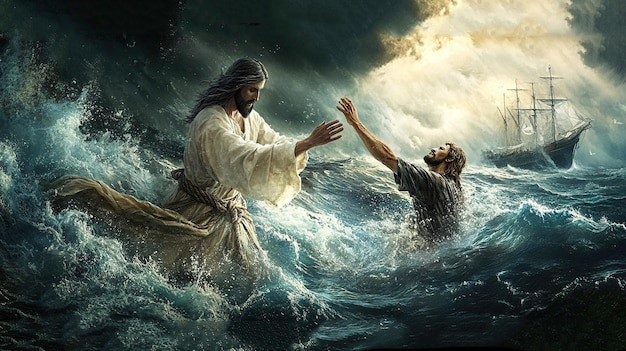
Noah’s Ark foreshadows Jesus as Saviour

“The ark saved Noah and his family from destruction, but Jesus is the greater ark—rescuing all who trust in Him from the final judgment to come (1 Thessalonians 1:10). Just as Noah had to enter the ark to be saved, we must be in Christ to receive eternal life”. Stephanie Solberg Stephanie Solberg I am a truth seeker https://makinghimknown.tv/the-ark-of-salvation/ …. Throughout the Old Testament, God uses prophetic symbols to foreshadow people and events in the New Testament. These symbols reveal who God is and give us pictures of His future salvation. The ark that Noah built is one of these prophetic symbols. Last time, in “Sunk in Sin,” we examined Moses’s faith and how God showed him grace in a world immersed in sin. Now, we will examine the flood story as an image of God’s redemptive plan for mankind. Jesus Is Our Ark: How Genesis 6-8 Reveals God’s Salvation Plan God sent the flood as both a judgment on sin and a fresh start for creation. Only 8 or 9 generations passed between Adam and Noah. Yet, sin ravaged God’s beautiful creation so completely that when God looked at it, He saw that every intent of the thoughts of man’s heart was only evil continually (Genesis 6:5). Instead of wiping out humanity, God provided a way out—an ark of salvation. Because Noah found favor with God, God presented Noah the way to be saved from the wrath He was about to rain down on earth. Through Noah, God gave the world a witness of righteousness (2 Peter 2:5), warning them of judgment. Yet, the people ignored the warning, continuing in their wickedness until it was too late (Matthew 24:37-39). Noah’s Ark provided temporary salvation from physical death, but Jesus offers eternal salvation from sin and judgment. The ark saved Noah and his family from destruction, but Jesus is the greater ark—rescuing all who trust in Him from the final judgment to come (1 Thessalonians 1:10). Just as Noah had to enter the ark to be saved, we must be in Christ to receive eternal life. There are many ways the ark is a shadow of Jesus, a better version of the ark to come. Noah’s Ark: A Picture of Salvation and Jesus God commanded Noah to build just one door in the ark (Genesis 6:16), the only entrance to salvation for his family. In the same way, Jesus is the only door to the Father, our salvation (John 14:16). Jesus, Our Refuge in Life’s Storms Jesus himself said, “I am the door; if anyone enters by Me, he will be saved…” (John 10:9). The ark was Noah’s refuge from the storm (Genesis 6:17-19), just as Jesus is our refuge from God’s wrath (Romans 5:9). Finding Rest in Jesus, Our Ark of Salvation God did not command Noah to go on the ark but invited him to “come” on it instead (Genesis 7:1). Noah’s work was over, and now he could rest. Jesus also invites us to come to Him where we can find rest (Matthew 11:28). The choice is ours: Do we go to Him and be saved, or do we run from Him and be condemned? Eternal Security in Christ: Sealed Like Noah in the Ark Once Noah was in the ark, he was secure. The Lord shut him in (Genesis 6:17). We can also be confident that we are secure in Christ. God, through the Holy Spirit, has sealed us as His own, guaranteeing our salvation to come (Ephesians 1:13). …. Jesus: God’s Gift of Salvation, Foreshadowed in the Ark God gave Noah the ark as a gift. Without it, Noah would have perished like the rest of the world. God also gave us Jesus, His only Son, so that if we believe in Him, we will not perish (John 3:16). God’s Covenant With Noah and His Promise to Us As the waters rose above the mountains, so did the ark. It continued to float on the water’s surface until it rested on Mount Ararat. Some scholars note that this event aligns with the Hebrew month of Nisan, the same month Jesus would later rise from the dead—showing yet another way the ark foreshadows Christ’s salvation. The ark’s work was done, and Noah emerged from it to a clean world with new possibilities. God blessed Noah and gave him dominion over the new earth as Adam and Eve did ten generations earlier. He told Noah and his family to be fruitful and increase in number across the earth (Genesis 9:7). God then made a covenant with Noah that He would never again destroy the world with water (Genesis 9:8-11). This covenant pointed forward to the greater covenant in Christ, where God provides eternal salvation, not just temporary rescue. Just as the ark delivered Noah through the waters, Jesus delivers us through the waters of judgment, sealing us in a covenant of grace (Luke 22:20, Hebrews 9:15). God remembered Noah, and He remembers us, too. Noah didn’t deserve to be on the ark, and we don’t deserve Jesus either. Despite our unworthiness, God offers us a way to salvation through His Son, Jesus Christ. When the rains of life pour down, when the waters begin to rise, Jesus offers us refuge and rest. We need not fear the rising waters because we are secure in Him. Just as Noah and his family were safe in the ark, we are safe in Christ. No storm can shake us, no flood can overwhelm us, because our salvation is sealed in Him. We have a better version of the ark; we have Jesus!

Monday, April 21, 2025

Christianity can quickly surge

“And suddenly as no one planned, Behold the kingdom grow!” Professor James McAuley Australian poet, Professor James McAuley, was my (Damien Mackey’s) English teacher at the University of Tasmania, in 1970. I recalled this time in my article: Memories of Australian poet, professor James P. McAuley (1) Memories of Australian poet, professor James P. McAuley Greg Sheridan quoted Professor McAuley’s words concerning “the kingdom grow” in his Easter article for The Australian (April 19, 2025): https://www.theaustralian.com.au/inquirer/the-most-extraordinary-thing-about-this-easter-the-surge-towards-christianity/news-story/81f9acba04311a0755a32f8e1e970e14?giftid=yHc2bCOjw9 The most extraordinary thing about this Easter? The surge towards Christianity Resurrection, heaven, and even the most unpopular doctrine, hell, are essential to the elevated Christian vision of human dignity. Easter Sunday is the most revolutionary day the world has known. For an atheist it’s the day of the greatest hoax in human history. For a Christian, it’s the day Jesus triumphed over death, the day the meek inherited the earth, the last became the first, the promise of eternal life became physical reality. If that’s true, it’s true for everyone in the world, not just for Christians. No Christian believes the resurrection was a metaphor, a psychological or purely spiritual experience, an apparition without substance. As St Paul wrote: If Christ is not risen our faith is in vain, and we are the most to be pitied of all people. The resurrection imposes a startling, unavoidable binary on everyone who encounters it. Either you believe it’s a lie, and Christianity worthless, or you believe it happened, and Jesus is God. One reason novelist Graham Greene gave for his conversion to Christian belief was the detail, the physicality, the feel of truth, not to mention the raw emotional honesty of the gospels, especially John’s gospel, especially its account of the resurrection. Mary Magdalene is the first to discover Jesus’ tomb is empty: “Mary stood weeping outside the tomb.” As she weeps, she tells a stranger: “They have taken away my Lord, and I do not know where they have laid him.” Then she meets Jesus; she’s the first of the Christians to meet the risen Jesus, yet doesn’t recognise him immediately. There is so much good news for the human race in this passage, so many clues about this life, about eternal life. But let’s pause for one other bit of good news. For the past decade I’ve been writing about the decline of Christianity in the West (not elsewhere, it’s on fire in Africa and Asia). This seemed overwhelming and it was hard to know where it would lead. A few months ago I noticed something strange going on and wrote about the conversion of the great historian Niall Ferguson and his wife, Ayaan Hirsi Ali, to Christian belief in the Anglican communion. I noticed the surge of numerous leading Western intellectuals, by no means all conservatives, coming to Christianity. Now, the weirdest thing is happening. The statistical decline of Christianity in the US, in parts of Europe, even perhaps in Australia, has puzzlingly stopped. The Economist reports that a surprising number of American Gen Z and millennials have “got religion”. The Pew polling organisation records the proportion of adults in the US identifying as Christian has remained stable over the past five years at about 62 per cent. Here’s an even more startling statistic from Britain. Based on YouGov surveys, in 2018 some 4 per cent of 18 to 24-year-olds went to church once a month. In 2024 that figure was 16 per cent. Christianity’s still a minority of that cohort, but that’s dramatic growth. In France, a bastion of anti-Christian secularism, the Catholic Church will baptise more than 10,000 new converts this Easter, nearly half as many again as in 2024, and the biggest number since statistics of this kind have been kept over the past 20 years. Nearly half these converts are aged 25 and under. Similar things are happening elsewhere in Europe. Melbourne’s Catholic Archbishop, Peter Comensoli, noted in his recent Patrick Oration that there will be 400 converts to Catholicism in Melbourne at Easter. In his diocese, Sunday mass attendance has gone from 84,000 in 2022 to 103,000 in 2024. … Every Christian leader I’ve consulted about this responds in the same way, with caution and humility. Let’s see if it’s sustained. Let’s not celebrate too soon. Let’s not be unseemly in rejoicing. Still, my own reaction would be: what a miracle! What a time it is to be alive. These startling trends recall the prophetic words of one of the greatest Australian poets, James McAuley, in Retreat, which, after describing the difficulties communicating the truth, unexpectedly concludes: “And suddenly as no one planned, Behold the kingdom grow!” Among Catholics the two movements with the most energy among young people are the rad trads, the highly traditionalist, and the charismatics, Catholic first cousins of the Pentecostals. Like the Pentecostals, these movements emphasise a personal encounter with God, with the transcendent. Christians should never shy away from how utterly weird, how completely gobsmackingly strange, their core beliefs are. Christians believe that God became man, born of a virgin, suffered humiliation and death, and rose from the dead. Christians believe that every week at church they eat the flesh of this God and drink his blood. Christians believe that every human being will live for all eternity in a transformed version of their body. Christians believe in the Four Last Things – death, judgment, heaven, hell. I’ve recently been reading a great deal about early Christians, after the apostles, mainly in their own words. Like the Christian movements experiencing success today, one striking feature of early Christians was that they leaned right into the essential weirdness of their beliefs. Nobody rejected Christianity in the first century Roman Empire because it was too bland. Both heaven and hell, in my view, are more than a bit neglected these days in much Christian discourse. Nobody spoke about heaven and hell more frequently than Jesus himself. We have the experience during his crucifixion, when he tells the good thief, dying beside him: “Today you will be with me in paradise.” These words rightly offer hope, but they also offer information, teaching. It’s possible to be with Jesus, in paradise, after death. The relationship with Jesus is everything. We don’t know in detail what heaven will be like. Christian scripture deals mainly in metaphor in describing the indescribable – the pearly gates and so on. John, in his first letter, sensibly comments: “What we will be has not yet been revealed.” But he continues: “What we do know is this, we will be like him (God) for we will see him as he is.” We know something of what even our risen bodies will be like from the encounter Mary Magdalene had with the risen Jesus. She doesn’t recognise him at first, then she does. His body is transformed. It’s no longer bound by the physical limitations of the pre-resurrection body. And yet it’s a physical body still. Thomas, the doubting apostle, places his hand in Jesus’ wounds to prove they are real. Jesus eats and drinks with the apostles, at one point cooking them breakfast. Vince Gair, a long-forgotten DLP politician, used to say: if you must be a dog, be an Alsatian. That’s a very inapt comparison, but let me make it anyway. The message is, be wholeheartedly the thing you’re going to be. There are some tough words about the lukewarm in the New Testament. I always think of any Christian movement – if you believe in the supernatural, talk about the supernatural, if not all the time, at least pretty frequently. Heaven is part of the Good News. It’s not just an image or outside possibility to provide modest consolation, a sporting chance so to speak, for mourners at funerals. It’s a solemn promise of the living God. It’s the promise of Jesus in crucifixion. But if Christians avoid heaven, these days they almost never mention hell. That too is a mistake. It’s surely the case that some Christians previously used the fear of hell in emotionally manipulative ways. It’s also true that concern for the supernatural is no excuse for neglecting the poor or those in need today. Again Jesus has some pretty tough words on such neglect. But heaven and hell together are part of the strikingly elevated conception of human dignity that Christianity, and indeed the whole Judeo-Christian tradition, uniquely teach. As John says about heaven, we will be like God. That should inspire awe. It also goes right back to the beginning of the Bible, to Genesis, and the most radical statement in celebrating human nature, and therefore human rights, ever made in the ancient world – that God created humanity in the image of God. Human nature is exceptional in every way. Atheists often demand Christians explain human evil. Christians could point out that atheists can’t explain human virtue, human heroism. When God became man, in Jesus, this further elevated humanity’s nature. In some ways, people share in the nature of God and share some God-like qualities. One is human creativity. Another is language. God spoke the world into being. God spoke something and it existed. Human beings think something and in a sense a version of it exists in their mind. This power of proactive creation is God-like. Yet of course human nature is also flawed, limited and fallen. One of the most extraordinary gifts God gave is free will. Our age in particular, though in love with freedom at the trivial levels, always shies away from the responsibility that goes with real freedom. When there is a mass murder the explanation is routinely medicalised. Psychologists, sociologists, many other “ologists” incline to erase human agency and responsibility. But the Jewish and Christian scriptures, and every aspect of our own lived experience, show us that human beings have agency, they make choices, including moral choices, their choices have consequences, they are responsible for their choices. The Christian story is also that God offers forgiveness to anyone who is genuinely sorry. Many Christians feel they couldn’t bear the weight of their own sins without the promise of God’s forgiveness. At the same time, God respects the free will of human beings. Viktor Frankl, a psychiatrist who survived Adolf Hitler’s death camps and wrote about them in the magnificent Man’s Search for Meaning, concluded that there was one final value no one, not even the Nazis, could take from any person. He wrote: “Everything can be taken from a man but one thing: the last of the human freedoms – to choose one’s attitude in any given set of circumstances, to choose one’s own way.” Frankl described the systematic Nazi effort to dehumanise the inmates of the concentration camps. Central to dehumanising them was to remove the faculty for moral choice. But Frankl observed that in the end nothing absolved a human being of moral choice. A human being can be coerced into actions but still there is the spirit of resistance, the decision on whether this action is willing or forced. Moral choice is inescapable. Throughout history there are endless efforts and conspiracies to deprive humanity of the reality of moral choice, of free will with consequences, as though we just can’t cope with it. Some Christians so emphasise God’s sovereignty, that he can save or not whoever he likes, that they understate the majesty of his gift of free will. No one earns heaven. It’s rather that they accept God’s gracious gift and also repent of their wrongdoing. A range of early Christian heresies held that salvation, entry to heaven, to ultimate friendship with God, was either so difficult that only a tiny number of the elect could attain it, or conceived it as effectively universal. Our psychobabulous and neurotically therapeutic age similarly hates individual responsibility, preferring often to vest responsibility in racial or gender categories, or in national histories or even the impersonal movements of history. Of course, in truth, human history is driven by individual human beings, who make individual choices. Sam Harris, one of the New Atheists (I must honestly confess to finding this group’s logic-chopping arguments tedious and unimpressive, but that’s a matter of taste), in Free Will argues that effectively there’s no such thing as free will. Whereas in reality everyone is influenced by their background, by their experiences, but if there is really no free will then we’ve never done anything wrong. Does that describe you? For all that, Christians have always grappled uneasily with the idea of hell. How could a good God allow an eternity of punishment for anyone he created? The New Testament talks of hell in metaphor and it may be that its awful suffering is simply the realisation of losing the chance of intimate friendship with God. CS Lewis famously argued that the door to hell is always locked from the inside; that is, it contains people who continue to reject God, who remain in rebellion. Some Christian theologians hope that hell is empty, which is a reasonable hope. Others believe hell cannot possibly be consistent with a loving God. That’s not the mainstream Christian position. For if there is no hell, or rather no possibility of hell for it may well indeed be empty, there’s no real free will. Human beings exist then just like animals, faithful to their nature, doing as they will, not capable of a lasting moral choice. Instead, for free will to be real, there must be the possibility of rejecting God and God’s honouring that rejection. Rejecting God is not exactly the same as rejecting Christianity. God is not just good, God is goodness itself. The Catholic catechism, for example, teaches that someone who doesn’t know about God, or doesn’t know about Jesus, but honestly seeks out the good, in other words seeks out God, may also find salvation. Of course, notwithstanding how much there is about this in the New Testament, and in Christian tradition, the truth is many things remain a mystery. Many things are beyond our understanding, approached only in metaphor. Nonetheless, death and judgment, heaven and hell, are elements of the uniquely elevated, truly glorious conception of human nature that Christianity teaches. The triumph of Easter is full of hope. As one of the early Christians, Irenaeus, argued: “The glory of God is man fully alive.” And never more alive than Easter Sunday.