by
Damien F. Mackey
Once I had a lively encounter with a Moslem at a bus stop in Earlwood (Sydney, Australia). Our discussion, generally friendly, sometimes a bit noisy, attracted the attention of bystanders who listened, smiled or laughed, and even occasionally joined in. The question that this man seemed most eager to ask, and for which he dearly wanted an answer, was this: ‘What do you think of Muhammad?’
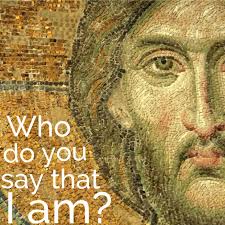
Whatever an individual Christian may think of Mohammed, the real question that should most preoccupy his or her mind is that burning question that Jesus himself was most desirous of asking, and for which He awaited an answer: ‘Who do men say that I am?’ This question is posed in all three Synoptic Gospels.
The fact is that Jesus’ contemporaries were not really sure who he was. ‘Elijah’, said some. ‘John the Baptist’, said others. ‘One of the prophets returned from the dead’. Or, perhaps, ‘Jeremiah’. Some great man, for sure, but not one utterly unique.
It was the Apostle Peter who, under the inspiration of the Holy Spirit, gave the right answer when the question was personalised by Jesus to: ‘Who do you say that I am?’; though Peter still had very much to learn about the significance of what he had proclaimed, for he would soon be rebuked by Jesus as a ‘Satan’ (Mark 8:33).
Pope Benedict XVI has marvellously discussed the whole question of Jesus’ identity – and the contrast between opinions of, and belief in, Him – in Chapter Nine of his book, Jesus of Nazareth, beginning with (pp. 287-288):
Peter’s Confession
All three Synoptic Gospels present Jesus’ question to the disciples about who the people think he is and who they themselves consider him to be – (Mk 8:27-30; Mt 16:13-20; Lk 9:18-21) as an important milestone on his way. In all three Gospels, Peter answers in the name of the Twelve with a confession that is markedly different from the opinion of the “people”. …. In all three Gospels, however, he also interprets this “following” on the way of the Cross from an essentially anthropological standpoint: It is the indispensable way for man to “lose his life”, without which it is impossible to find it (Mk 8:31-9:1; Mt 16:21-28; Lk 9:22-27).
And finally, in all three Gospels there follows the account of the Transfiguration of Jesus, which once again interprets Peter’s confession and takes it deeper, while at the same time connecting it with the mystery of Jesus’ death and Resurrection (Mk 9:2-13; Mt 17:1-13; Lk 9:28-36).
Only Matthew immediately follows Peter’s confession with the bestowal upon Peter of the power of the keys – of the power to bind and loose – and this is connected with Jesus’ promise to build his Church upon Peter as on a rock. Parallel passages concerning this commission and this promise are found in Luke 22:31f. in the context of the Last Supper and in John 21:15-19 after Jesus’ Resurrection.
It should be pointed out that John, too, places a similar confession on Peter’s lips, which once again is presented as a decisive milestone on Jesus’ way, giving the circle of the Twelve its full weight and profile for the first time (Jn 6:68f.) ….
So, what was the answer that Peter gave, that so pleased Jesus? Peter had replied (Matthew 16:16):
‘Thou art the Christ [or the Messiah], the Son of the living God!’
To which Jesus responded: ‘Blessed are you, Simon son of Jonah! For flesh and blood has not revealed this to you, but my Father in heaven’ (v. 17).
Clearly there were now two basic views abroad about the identity of Jesus: the one, his “unique filial being”, as the Pope puts it – as Peter was inspired to utter (“Peter’s confession”) – and the other, the common one of the people. Pope Benedict goes on to tell how the former view, the correct one, crystallised in the disciples who were now “on the way”, distinguishing them from the people (pp. 290-291):
The great period of preaching in Galilee is at an end and we are at a decisive milestone: Jesus is setting out on the journey to the Cross and issuing a call to decision that now clearly distinguishes the group of disciples from the people who merely listen, without accompanying him on his way – a decision that clearly shapes the disciples into the beginning of Jesus’ new family, the future Church. It is characteristic of this community to be “on the way” with Jesus – what that way involves is about to be made clear. It is also characteristic that this community’s decision to accompany Jesus rests upon a realization – on a “knowledge” of Jesus that at the same time gives them a new insight into God, the one God in whom they believe as children of Israel.
In Luke – and this is entirely in keeping with his portrait of the figure of Jesus – Peter’s confession is connected with a prayer event. Luke begins his account of the story with a deliberate paradox: “As he was praying alone, the disciples were with him” (Lk 9:18). The disciples are drawn into his solitude, his communion with the Father that is reserved to him alone. They are privileged to see him as the one who – as we reflected at the beginning of this book – speaks face-to-face with the Father, person to person. ….
[These various opinions … do not arrive at Jesus’ identity, at his newness. They interpret him in terms of the past, in terms of the predictable and the possible, not in terms of himself, his uniqueness ….]
This ‘speaking face-to-face with the Father’ will become a most important consideration when later (beginning on p. 24) we consider a challenge by another Moslem, Islamic missionary Ahmed Deedat of
Indian-
South African descent (now deceased), that Jesus Christ could not have been the one foretold to Moses in Deuteronomy 18:18: “I will raise them up a Prophet from among their brethren, like unto thee …”, but that Mohammed was that one. We are going to find that, whilst Deedat’s Christian opponent, a dominee (or minister) of the Dutch Reformed Church, was not really able adequately to counter the Moslem’s forceful argument, Pope Benedict XVI has, in his book, provided the perfect answer to an argument such as Deedat’s. Whether the many will respond to it, though, and enter upon “the way”, or just the few as in the case of the disciples, remains to be seen. For those who do make the leap in faith, then the privileges are untold and unique. Thus the Pope continues (pp. 291-292):
[The Twelve] are privileged to see him in his utterly unique filial being – at the point from which all his words, his deeds, and his powers issue. They are privileged to see what the “people” do not see, and this seeing gives rise to a recognition that goes beyond the “opinion” of the people. This seeing is the wellspring of their faith, their confession; it provides the foundation for the Church.
Here we may identify the interior location of Jesus’ two-fold question. His inquiry about the opinion of the people and the conviction of the disciples presupposes two things. On the one hand, there is an external knowledge of Jesus that, while not necessarily false, is inadequate. On the other hand, there is a deeper knowledge that is linked to discipleship, to participation in Jesus’ way, and such knowledge can grow only in that context. All three Synoptics agree in recounting the opinion of the people that Jesus is John the Baptist, or Elijah, or some other of the Prophets returned from the dead; Luke has just told us that Herod, having heard about such accounts of Jesus’ person and activity, felt a wish to see him. Matthew adds an additional variation: the opinion of some that Jesus is Jeremiah.
The common element in all these ideas is that Jesus is classified in the category “prophet”, an interpretative key drawn from the tradition of Israel. All the names that are mentioned as interpretations of the figure of Jesus have an eschatological ring to them, the expectation of a radical turn of events that can be associated both with hope and with fear. While Elijah personifies hope for the restoration of Israel, Jeremiah is a figure of the Passion, who proclaims the failure of the current form of the Covenant and of the Temple that, so to speak, serves as its guarantee. Of course, he is also the bearer of the promise of a New Covenant that is destined to rise from the ashes.
By his suffering, by his immersion in the darkness of contradiction, Jeremiah bears this twofold destiny of downfall and renewal in his own life.
These various opinions are not simply mistaken; they are greater or lesser approximations to the mystery of Jesus, and they can certainly set us on the path towards Jesus’ real identity. But they do not arrive at Jesus’ identity, at his newness. They interpret him in terms of the past, in terms of the predictable and the possible, not in terms of himself, his uniqueness, which cannot be assigned to any other category. Today, too, similar opinions are clearly held by the “people” who have somehow or other come to know Christ, who have perhaps even made a scholarly study of him, but have not encountered Jesus himself in his utter uniqueness and otherness. Karl Jaspers spoke of Jesus alongside Socrates, the Buddha, and Confucius as one of the four paradigmatic individuals. He thus acknowledged that Jesus is of fundamental significance in the search for the right way to be human. Yet for all that, Jesus remains one among others grouped within a common category, in terms of which they can be explained and also delimited.
[End of quotes]
Pope Benedict XVI accounts for the utter uniqueness of Jesus Christ, as opposed to a “common” view of him – an old but also a contemporary view – as just one amongst a group of history’s most enlightened individuals. But we are also going to introduce into this discussion, Mohammed, to whom the Pope did not refer.
[Ultimately, though, this notion of Jesus’ “experience of God” remains purely relative and needs to be supplemented by the fragments of reality perceived by other great men. It is man, the individual subject, who ends up being himself the measure ….]
The former Pope Benedict XVI continues his critical account of the typical view of Jesus Christ, whereby “man, the individual subject … ends up being himself the measure” (the theme of a previous MATRIX article, “The Futile Aspiration to Make ‘Man the Measure of All Things’”). Thus (p. 293):
Today it is fashionable to regard Jesus as one of the great religious founders who were granted a profound experience of God. They can thus speak of God to other people who have been denied this “religious disposition”, as it were, drawing them into their own experience of God. However, we are still dealing here with a human experience of God that reflects his infinite reality in the finitude and limitation of a human spirit: It can therefore never amount to more than a partial, not to mention time- and space-bound, translation of the divine. The word experience thus indicates on one hand a real contact with the divine, while also acknowledging the limitation of the receiving subject. Every human subject can capture only a particular fragment of the reality that is there to be perceived, and this fragment then requires further interpretation. Someone who holds this opinion can certainly love Jesus; he can even choose him as a guide for his own life. Ultimately, though, this notion of Jesus’ “experience of God” remains purely relative and needs to be supplemented by the fragments of reality perceived by other great men. It is man, the individual subject, who ends up being himself the measure: The individual decides what he is going to accept from the various “experiences”, what he finds helpful and what he finds alien. There is no definitive commitment here.
[End of quote]
This really sums up the Moslem view, too, of Jesus as a great prophet, “peace be upon him”, though lesser than Mohammed himself. In fact it also sums up the Moslem God, Allah, as one derived from man’s being the measure, not God. Though it does not mean that a Moslem cannot love and serve God (as according to the Pope’s explanation regarding “love” of Jesus Christ even without full knowledge of him), and that he cannot “choose him as a guide for his own life”.
However, there is also that true saying that ‘one cannot love what one does not know’, which, in our context, could be re-stated as ‘one’s capacity for loving Jesus Christ must be greatly enlarged by one’s having a proper concept of who He is, according to the Pope’s explanation’.
Similarly, a God of whom Jesus Christ is not the perfect image and reflection is not God in his true actuality. He cannot therefore be loved as a St. Augustine, for instance, loved God, Christo-centrically. It is only through Jesus Christ that God can truly be known. ‘Whoever has seen me has seen the Father’ (John 14:9).
And of course it is our AMAIC spirituality that the perfect way to Jesus Christ himself is through Mary, his Mother; the only human person with a clear, undimmed vision of God. That is why the AMAIC has always urged for a profound and true devotion to holy Mary. By this means one’s spiritual ‘lenses’ can be properly cleansed and brought into focus, so to speak, thereby enabling one to recognise the true face of Jesus Christ.
Why Islam Thinks that Mohammed, not Jesus, was Foretold by Moses.
We are now going to conclude by looking at Ahmed Deedat’s argument (much edited) against the South African Christian dominee. Deedat’s argument might throw many a Christian, as it apparently gave trouble to the dominee. But it would not throw the Pope, who has authoritatively shown how Jesus Christ, and He alone, was the fulfilment of the One whom Moses had foretold.
Islamic lecturer, Ahmed Deedat, tells of an interview he once had with a dominee of the Dutch Reformed Church in Transvaal, van Heerden, on the question: “What does the Bible say about Muhummed?” Deedat had in mind the Qur’an [Koran] verse 46:10, according to which “a witness among the children of Israel bore witness of one like him…”. This was in turn a reference to Deuteronomy 18:18′s “I will raise them up a Prophet from among their brethren, like unto thee, and I will put my words in his mouth; and he shall speak unto them all that I shall command him.” The Moslems of course interpret the “Prophet … like unto [Moses]” as being Mohammed himself.
Faced with the dominee’s emphatic response that the Bible has “nothing” to say about Mohammed – and that the Deuteronomic prophecy ultimately pertained to Jesus Christ, as did “thousands” of other prophecies – Deedat set out to prove him wrong. Firstly he asked the dominee: Out of the ‘thousands’ of prophecies referred to, can you please give me just one single prophecy where Jesus is mentioned by name? The term ‘Messiah’, translated as ‘Christ’, is not a name but a title. Is there a single Prophecy where it says that the name of the Messiah will be JESUS, and that his mother’s name will be MARY, that his supposed father will be JOSEPH THE CARPENTER; that he will be born in the reign of HEROD THE KING, etc. etc.? No! There are no such details! Then how can you conclude that those ‘thousand’ Prophecies refer to Jesus (Peace be upon him)?
To which the dominee replied: “You see, prophecies are word-pictures of something that is going to happen in the future. When that thing actually comes to pass, we see vividly in these prophecies the fulfilment of what had been predicted in the past”. Deedat responded: “What you actually do is that you deduce, you reason, you put two and two together.” He said: “Yes”. Deedat said: “If this is what you have to do with a ‘thousand’ prophecies to justify your claim with regards to the genuineness of Jesus, why should we not adopt the very same system for Muhummed?”
The dominee agreed that it was a fair proposition, a reasonable way of dealing with the problem. He argued that the key phrase in the Deuteronomic prophecy was “like unto thee” – LIKE YOU – like Moses, and Jesus is like Moses”. Deedat questioned: “In which way is Jesus like Moses?” The answer was: “In the first place Moses was a JEW and Jesus was also a JEW; secondly, Moses was a PROPHET and Jesus was also a PROPHET – therefore Jesus is like Moses and that is exactly what God had foretold Moses – “SOOS JY IS” [in Afrikaans]“.
Whilst the dominee’s reply here is basically true (though Moses was strictly speaking not a Jew, but a Hebrew or Israelite – ‘all Jews are Israelites, but not all Israelites are Jews’) – he probably gets off on the wrong foot straightaway by attributing to Jesus what could be attributed to any number of Jewish prophets. In other words, he does not begin with what makes Jesus unique, and with – in the context of Moses – what makes Him “like” the latter, but unique nevertheless, as explained by the Pope. Now, whether someone will listen attentively to the argument is another matter. I, for instance, fresh from reading Pope Benedict XVI, had used his main point in my discussion with the Moslem. But it seemed not in any way to have been absorbed. However, the important thing is that we know what the answer is, and can enunciate it. And, hopefully, there will be some who will be able to comprehend it. It is greatly to be hoped that the Pope’s book will be read, studied and absorbed by many.
Deedat quickly realizes that his opponent has not attributed to Jesus anything singular. “Can you think of any other similarities between Moses and Jesus?” Deedat asked.
The dominee said that he could not think of any.
Deedat replied: “If these are the only two criteria for discovering a candidate for this prophecy of Deuteronomy 18:18, then in that case the criteria could fit any one of the following Biblical personages after Moses: – Solomon, Isaiah, Ezekiel, Daniel, Hosea, Joel, Malachi, John the Baptist etc., because they were also ALL Jews as well as Prophets. Why should we not apply this prophecy to any one of these prophets, and why only to Jesus? Why should we make fish of one and fowl of another?”
[Or why, one might ask, does Islam not say that the prophecy was in fact referring to one of these above-mentioned sages of Israel?; a point that I shall be taking up again on “A Personal View of Who Mohammed Might Have Been”].
The dominee had no reply. Deedat continued: “You see, my conclusions are that Jesus is most unlike Moses, and if I am wrong I would like you to correct me”.
So saying, Deedat reasoned with him: “In the FIRST place Jesus is not like Moses, because, according to you – ‘JESUS IS A GOD’, but Moses is not God. Is this true?” He said: “Yes”. Deedat said: “Therefore, Jesus is not like Moses!
SECONDLY, according to you – ‘JESUS DIED FOR THE SINS OF THE WORLD’, but Moses did not have to die for the sins of the world. Is this true?”
He again said: Yes”. Deedat said: “Therefore Jesus is not like Moses! THIRDLY, according to you – ‘JESUS WENT TO HELL FOR THREE DAYS’, but Moses did not have to go there. Is this true?” He answered meekly: “Y-e-s”.
Deedat concluded: “Therefore Jesus is not like Moses!” “But dominee,”, Deedat continued: “these are not hard facts, solid facts, they are mere matters of belief over which the little ones can stumble and fall. Let us discuss something very simple, very easy that if your little ones are called in to hear the discussion, would have no difficulty in following it, shall we?”
The dominee was quite happy at the suggestion. Deedat will now proceed to list a whole lot of biographical points according to which Moses and Mohammed – human persons who were married and had children – were alike, but were quite unlike Jesus. This is to prove his point that Mohammed, not Jesus, was ‘like unto Moses’, and that Mohammed therefore, and not Jesus, was the one who fulfilled the Deuteronomic prophecy. We shall take only a few of these cases from Deedat’s long-winded and well-rehearsed spiel:
Father and Mother
“Moses had a father and a mother. Muhummed also had a father and a mother. But Jesus had only a mother, and no human father. Is this true?” He said: “Yes”. Deedat said: “DAAROM IS JESUS NIE SOOS MOSES NIE, MAAR MUHUMMED IS SOOS MOSES!” Meaning: “Therefore Jesus is not like Moses, but Muhummed is like Moses!”
Miraculous Birth
“Moses and Muhummed were born in the normal, natural course, i.e. the physical association of man and woman; but Jesus was created by a special miracle. You will recall that we are told in the Gospel of St. Matthew 1:18: ‘…..BEFORE THEY CAME TOGETHER, (Joseph the Carpenter and Mary) SHE WAS FOUND WITH CHILD BY THE HOLY GHOST’. And Dr. Luke tells us that when the good news of the birth of a holy son was announced to her, Mary reasoned: ‘…….HOW SHALL THIS BE, SEEING I KNOW NOT A MAN? AND THE ANGEL ANSWERED AND SAID UNTO HER, THE HOLY GHOST SHALL COME UPON THEE, AND THE POWER OF THE HIGHEST SHALL OVERSHADOW THEE:……’ (Luke 1:35).
In short, Deedat said to the dominee: “Is it true that Jesus was born miraculously as against the natural birth of Moses and Muhummed?” He replied proudly: “Yes!” Deedat said: “Therefore Jesus is not like Moses, but Muhummed is like Moses. And God says to Moses in the Book of Deuteronomy 18:18 “LIKE UNTO THEE” (Like You, Like Moses) and Muhummed is like Moses”.
Marriage Ties
“Moses and Muhummed married and begat children, but Jesus remained a bachelor all his life. Is this true?” The dominee said: “Yes”. Deedat said: “Therefore Jesus is not like Moses, but Muhummed is like Moses”.
Jesus Rejected by his People
“Moses and Muhummed were accepted as prophets by their people in their very lifetime. No doubt the Jews gave endless trouble to Moses and they murmured in the wilderness, but as a nation, they acknowledged that Moses was a Messenger of God sent to them. The Arabs too made Muhummed’s life impossible. He suffered very badly at their hands. After 13 years of preaching in Mecca, he had to emigrate from the city of his birth. But before his demise, the Arab nation as a whole accepted him as the Messenger of Allah. But according to the Bible: ‘He (Jesus) CAME UNTO HIS OWN, BUT HIS OWN RECEIVED HIM NOT’. (John 1:11). And even today, after two thousand years, his people – the Jews, as a whole, have rejected him. Is this true?” The dominee said: “Yes”. Deedat said: “THEREFORE JESUS IS NOT LIKE MOSES, BUT MUHUMMED IS LIKE MOSES”. …
How they Departed
“Both Moses and Muhummed died natural deaths, but according to Christianity, Jesus was violently killed on the cross. Is this true?” The dominee said: “Yes”. Deedat averred: “Therefore Jesus is not like Moses but Muhummed is like Moses”.
And so it goes on, with Deedat, like an eager prize fighter, landing virtually all of the punches, and becoming ever more emboldened and aggressive.
‘What do you think of Muhammad?’, the similarly keen and feisty Moslem in Earlwood had been so keen to ask me. Here is my own most tentative – at this stage – view of who Mohammed was, not to be found in any text books.
Who The Prophet Mohammed Really Was
Above, I had queried, in the context of Deedat’s argument: “… why, one might ask, does Islam not say that the [Deuteronomic] prophecy was in fact referring to one of these above-mentioned [by Deedat] sages of Israel?”
Let me explain what I am getting at. The Koran is, broadly speaking, so much like the Old Testament in many places that one could argue that it is simply the latter mixed with a lot of Arabic folklore and mythology, and derived from much unreliable oral tradition. In the Koran we meet again with all of the familiar Hebrew patriarchal and prophetical characters and sages of the Old Testament.
There is also the problem of chronology.
There are chronological problems, not only with the life of Mohammed himself, and the writings, but also with the early history of Islam. Books have been written ‘In Search of the Historical Mohammed’, who can be something of a conundrum.
I have for some time now thought that the prophet Mohammed must simply be one of the Old Testament characters, or perhaps a composite biblical character, re-written into an Arabian and New Testament scenario. In “Lost Cultural Foundations”, I had pointed to some very striking parallels between, for instance, the life of Mohammed and (as is reinforced by Deedat) the life of Moses.
But I also pointed there to certain aspects associated with Mohammed that I thought paralleled Jesus Christ; mainly the spiritual or miraculous, since Deedat is quite right in arguing that there can be no worthwhile comparison between the details of the lives of Jesus and Mohammed. I had also in the same series of articles pointed out such striking likeness between aspects of Buddha (even Krishna) and Jesus Christ – and other of those “paradigmatical” sages referred to above by both Pope Benedict XVI and Archbishop Fulton J. Sheen – that I had concluded, in the context of a revised chronology (on which the AMAIC has by now done much work), that these supposedly individual sages or gurus were just later local versions – even paganised or agnostic/heretical versions – of Jesus Christ himself.
Mohammed himself may be something of a composite biblical character.
However, there is also enough serious biographical information about him to make one think that he was basically a very real character; but one who has become chronologically – and perhaps even geographically – distorted. As a case in point, I was once asked to review for publication a book written by an Islamic scholar, Ahmed Osman, Out of Egypt …, according to which some of the greatest Hebrew and Jewish Old and New Testament characters, namely: Jacob, Joseph, Moses, David, Solomon, and the Holy Family of Jesus, Mary and Joseph, were all not only re-identified as native Egyptians, but were all lumped together by the author into the Eighteenth Pharaonic Dynasty of Egypt (conventionally, but wrongly, dated to c. 1550-1300 BC). That is, almost 2000 years of history jammed into about 200 years. Now that is mad historical revisionism at its worst! I entitled my review of this historical absurdity, “Osman’s ‘Osmosis’ of Moses”
Can it be that Islam sometimes does not have a clear sense of chronological or geographical perspective?
Might not Mohammed, too, be from a nation and an era quite different from the Arabian c. 600 AD era to which Islam has attributed him?
….
Note written on 17th February 2014:
wherein it uncovers the true identity of the Prophet Mohammed (Muhammad). See article:
The Serious Historical Dislocation of the Prophet Mohammed (Muhammad)


 28 Comments


 Son of God Trailer
 A message from Roma Downey and Mark Burnett
 Jewel - Oh Holy Night
 Son Of God | "Jesus Savior" | 20th Century FOX