Wednesday, November 6, 2019

Carsten Peter Thiede’s early dating of Matthew’s Gospel


Thiede Carsten Peter


“The neomodernist stranglehold is exemplified by the treatment accorded Fr. Jean Carmignac, who died in 1986. Perhaps the greatest French Bible scholar of the century, who dated the writing of each of the four Gospels between A.D. 40 and 50, he was never allowed to publish

his research, on orders of the French bishops. They accused Carmignac of "an obsession of struggling against the majority of exegetes".”
 
Paul Likoudis


Then came Dr. Carsten Peter Thiede with his dramatic evidence for a radical early dating of the Gospel of Matthew. We read a little of it in the following account:


Christmas Eve 1994 would have come and gone like any other, had it not been for three tiny papyrus fragments discussed in The Times of London’s sensational front-page story. The avalanche of letters to the editor jarred the world into realizing that Matthew d’Ancona’s story was as big as the discovery of the Dead Sea Scrolls. The flood of calls received by Dr. Carsten Peter Thiede, the scholar behind the story, and the international controversy that spread like wildfire, give us an inkling as to why the Magdalen Papyrus has embroiled Christianity in a high-stakes tug-of-war over the Bible.
 
Thiede and d’Ancona boldly tell the story of two scholars a century apart who stumbled on the oldest known remains of the New Testament–hard evidence confirming that St. Matthew’s Gospel is the account of an eyewitness to Jesus. It starts in 1901 when the Reverend Charles B. Huleatt acquires three pieces of a manuscript on the murky antiquities market of Luxor, Egypt. He donates the papyrus fragments to his alma mater, Magdalen College in Oxford, England, where they are kept in a butterfly display case, along with Oscar Wilde’s ring. For nearly a century, visitors hardly notice the Matthew fragments, initially dated to a.d.180-200; but after Dr. Thiede redates them to roughly a.d. 60, people flock to the library wanting to behold a first-century copy of the Gospel.
 
But what is all the fuss about? How can three ancient papyrus fragments be so significant? How did Thiede arrive at this radical early dating? And what does it mean to the average Christian? Now we have authoritative answers to these pivotal questions. Indeed, the Magdalen Papyrus corroborates the tradition that St. Matthew actually wrote the Gospel bearing his name, that he wrote it within a generation of Jesus’ death, and that the Gospel stories about Jesus are true. Some will vehemently deny Thiede’s claims, others will embrace them, but nobody can ignore Eyewitness to Jesus.
[End of quote]
 
Paul Likoudis, writing for EWTN in 1997, has more to say on the matter.
I (Damien Mackey) would not necessarily agree with him, though, that “Matthew's is the first Gospel”. Fr. Jean Carmignac (mentioned in this article) made an excellent case for (if I recall correctly) Mark’s being basically the Gospel of St. Peter – and therefore the first gospel - translated by Mark into Greek.
 
New Book Claims Four Gospels Written Before Fall Of Jerusalem
 
….
 
The hundred years' war on the Gospels-led by Rudolf Bultmann, who charged that "we can know practically nothing about Jesus' life and personality," and escalated by some of the most prominent Catholic Bible scholars working today-has produced the intended results of religious indifference, agnosticism, and atheism.
 
Typical of the Bultmann-inspired Catholic exegetes is Fr. Jerome. Murphy O'Connor, O.P., who, writing in the December, 1996 issue of the Claretians', pontificates that the Gospels are "mythical embellishments," that Jesus didn't know He was God and didn't know where His power came from, that Mary considered Him an embarrassment to the family, that she was not at the foot of the cross as the evangelists relate, and more.
 
"Do the Gospels Paint a Clear Picture of Jesus?," he asked. Definitely not, he tells his students and readers.
 
At the core of the dissident biblical exegesis which has produced such disastrous consequences for Catholic life, liturgy, catechetics, and scholarship is a refusal to believe that the Gospels were written by eyewitnesses of the events described.
 
Though there has been no shortage of genuine Catholic exegetes, archaeologists, and historians who have insisted on an early dating of the Gospels to within a decade or two of Jesus' life, these scholars have often found it difficult to break through the controls put in place by an oppressive neomodernist establishment in both Catholic and Protestant institutions.
 
(The neomodernist stranglehold is exemplified by the treatment accorded Fr. Jean Carmignac, who died in 1986. Perhaps the greatest French Bible scholar of the century, who dated the writing of each of the four Gospels between A.D. 40 and 50, he was never allowed to publish his research, on orders of the French bishops. They accused Carmignac of "an obsession of struggling against the majority of exegetes.")
 
Now comes a German scientist, Carsten Peter Thiede, director of the Institute for Basic Epistemological Research in Paderborn, who, with Matthew D'Ancona, is about to dash to pieces the Bultmann-built edifice of modernist exegesis.
 
Their recently published book, (Doubleday, 1996), is about a small piece of papyrus held at Magdalen College, Oxford, which is the oldest fragment of in existence today.
 
The fragment contains disjointed segments of 26, but even more important than the writing style, which Thiede pinpointed to the time of Jesus' life, is the use of KS, an abbreviated form of [missing], to refer to Jesus as Lord God- meaning that the ancient author believed that Jesus is divine.
 
Thiede, a papyrologist, furthermore concludes that must have been the first Gospel written.
The implications of this are enormous. As Thiede and D'Ancona write in their book:
 
"Bultmann was wrong: The authors of the Gospel could hear far more than the faintest whisper of Jesus' voice.
Indeed, the first readers of may have heard the very words which the Nazarene preacher spoke during his ministry, may have listened to the parables when they were first delivered to the peasant crowd; may even have asked the wise man questions and waited respectfully for answers. The voice they heard was not a whisper but the passionate oratory of a real man of humble origins whose teaching would change the world."
 
The issue of the dating of the Gospels has implications, furthermore, for believers and nonbelievers alike. "... We have come to realize the extent to which this new claim is directly relevant to the fundamental faith questions which all people, Christian and non-Christian, atheist and agnostic must ask themselves. The redating of the fragments, in other words, has a life beyond the confines of the academy. . .
"The redating of the Gospels- a process which is only now beginning in earnest-may seem an enterprise appropriate to its times, to the mood of the millennium's end. There is now good reason to suppose that the [missing], with its detailed accounts of the Sermon on the Mount and the Great Commission, was written not long after the crucifixion and certainly before the destruction of the Temple in A.D. 70; that the was distributed early enough to reach Qumran; that the belonged to the first generation of Christian codices; and that internal evidence suggests a date before A.D. 70 even for the nonsynoptic .... These are the first stirrings of a major process of scholarly reappraisal."
 
International Upheaval
 
Thiede's findings are causing an international upheaval among Bible scholars, particularly Catholic exegetes who have bought the Bultmann line that separates the Gospels to a generation or more from Jesus' contemporaries (making them the unreliable voice of an uncertain community) ….
 
Two hundred years ago, one of the leaders of the Enlightenment, Reimarus, described the task of Church-haters to be to "completely separate what the Apostles presented in their writings (i.e., the Gospels) from what Jesus himself actually said and taught during his lifetime."
….
 
Footnote
 
Among the brief sections of the Gospel on the Magdalen fragment is: "Then one of the XII, who was called Judas Iscariot, went to the chief priest and said, 'What will you give me for my work?'"
….

Tuesday, November 5, 2019

Institut Catholique de Paris ignores Carmignac


Image result for institut catholique de paris
Fr Jean Carmignac

dates Gospels early


Part Two:

Institut Catholique de Paris ignores Carmignac


“The Catholic weekly Il Sabato has been hunting down his manuscripts. It discovered that

Fr. Carmignac’s entire archive is to be found at the Institut Catholique in Paris where he

had taught. In all these years, the Institut Catholique has taken care not to tend to the publication of those pre-announced works, and, above all, it has prohibited people

from seeing the material when they ask to see it ...”.


The Wanderer


In the 1990’s, colleague Frits Albers (RIP), PH.B, wrote about what he considered to be the “betrayals” perpetrated by Paul Cardinal Poupard, the Archbishop of Paris, including his complete snub of the research of Fr. Jean Carmignac.


...

History has recorded several major betrayals by Cardinal Paul Poupard, Archbishop of Paris and president of its Institut Catholique. I will briefly describe two of them here as an introduction to his major one, his ‘resolution’ of the Galileo Case.


PART ONE:   WHY I MISTRUST CARD. PAUL POUPARD


Here follows the official text of this “public put-down”, issued by the Holy See press office on July 11, 1981, as it appeared in the Osservatore Romano of July 20 1981, mentioning Archbishop [by then not yet Cardinal] Paul Poupard by name.


The letter sent by the Cardinal Secretary of State to His Excellency Mons. Poupard on the occasion of the centenary of the birth of Fr. Teilhard de Chardin has been interpreted in a certain section of the press as a revision of previous stands taken by the Holy See in regard to this author, and in particular of the Monitum of the Holy Office of 30 June 1962, which pointed out that the work of the author contained ‘ambiguities and grave doctrinal errors’.


The question has been asked whether such an interpretation is well founded. After having consulted the Cardinal Secretary of State and the Cardinal Prefect of the Sacred Congregation of the Faith, which, by order of the Holy Father, had been duly consulted beforehand about the letter in question, we are in a position to reply in the negative. Far from being a revision of the previous stands of the Holy See, Cardinal Casaroli’s letter expresses reservations in various passages - and these reservations have been passed over in silence by certain newspapers - reservations which refer precisely to the judgment given in the Monitum of June 1962, even though this document is not explicitly mentioned.


The second example of betrayal involving the Institut Catholique of Paris and its president, Archbishop Paul Poupard, centres on interference with the dissemination of truth by means of the direct and wilful suppression of Catholic scholarship in favour of a free and unencumbered promotion of doctrinal errors. The scandal appeared in the March 19, 1992 edition of the American Catholic paper The Wanderer, quoting two other major European Catholic periodicals, 30 Days and Il Sabato.


Reporting a scandal: An editorial in the current issue of 30 Days magazine (issue no. 2), titled “Scandal at the Institut Catholique” raises some tough questions about the openness of modern biblical scholars to research which offers evidence that the Gospels were written by A.D. 50.


Reporting on investigative work conducted by the Italian Catholic weekly Il Sabato the editorial asks why the Institut Catholique in Paris will not allow to be printed, or even acknowledge the existence of, the biblical scholarship of Fr. Jean Carmignac.

Fr. Carmignac, until his death in 1986, was one of the world’s leading experts in Hebrew and Aramaic, and his extensive research in language and the Fathers of the Church led him to believe Matthew, Mark, and Luke had written their Gospels by A.D. 50.


In addition, Carmignac noted the scholarship of 49 other recognised experts who agreed with him, but whose works also had either been ignored or censored or else they did not dare wage a battle in the name of their scientific conviction.


“For the consequences”, stated the 30 Days editorial, “would have revolutionised the dominant exegetical trends today. Many ideas, whose certainty is taken for granted today, would have crumbled ... If the Synoptic Gospels were written in a Semitic language it means they were written soon after Jesus’ years on earth, when the protagonists were still alive. It means that the Synoptic Gospels are the testimonies of people who saw and heard, of witnesses to the facts. It means they are not late elaborations by anonymous transcribers of popular traditions”.


In 1983. Fr. Carmignac published a small book containing his findings and conclusions, and promised a later book which he described as “more convincing than ever and, I hope, irrefutable”.


But at that time an effort began to bury his work, the editorial said, under hefty shovelfuls of earth ... Six years after his death, none of these texts has ever been published. An impenetrable curtain of silence has fallen on Fr. Carmignac and his work. The Catholic weekly Il Sabato has been hunting down his manuscripts. It discovered that Fr. Carmignac’s entire archive is to be found at the Institut Catholique in Paris where he had taught. In all these years, the Institut Catholique has taken care not to tend to the publication of those pre-announced works, and, above all, it has prohibited people from seeing the material when they ask to see it ...


One of the 49 scholars mentioned here by the late Fr. Jean Carmignac is, no doubt, Claude Tresmontant whose magnificent book on that very same topic, The Hebrew Christ, carries a lengthy foreword by the Most Reverend Jean Charles Thomas, Bishop of Ajaccio, dated May 1, 1983: three years before the death of Fr. Jean Camignac. In his Foreword Bishop Thomas refers specifically to the same general state of affairs as was reported by the three Catholic papers mentioned above. There is no change of heart in either the ‘Institut Catholique’ or its president, Paul Poupard ...


Putting the Hebrew back in the Gospels


by
 
Damien F. Mackey
 
 
“On another matter, why does St. Mark tell us that Jesus, during the storm he is
about to calm, was inside the stern, sleeping on the cushion" and not "at the stern"
(where he would have interfered with the maneuvering of the boat)?”
 
The Association Jean Carmignac


Four quite modern endeavours in the study of Jesus Christ and the Gospels (I can think of), which - whilst generally going against the academic grain - remind us that Jesus was a Jew, that he spoke Hebrew, and that he was influenced by Hebrew tradition and wisdom rather than by pagan Greek thinking.
 
Regarding the fact that Jesus would have spoken Hebrew, I am indebted to Rev Brenton Minge who personally sent me a copy of his brilliant book, Jesus Spoke Hebrew: Busting the ‘Aramaic’ Myth.
 

This book I have (poorly) summarised in my series:
 
 
beginning with:


That the Philosophy of Jesus Christ was a Hebrew one, I am indebted to professor Peter Kreeft, who has made a good start on this much-neglected subject in his book, The Philosophy of Jesus, of which I have written in e.g.:


There is still much more work to be done, though, on this highly important aspect of philosophical studies.
 
Then there are the exciting researches regarding the language of the Gospels as undertaken by Fr. Jean Carmignac and Claude Tresmontant. 
 
On the former, see e.g. my article:


This man (d. 1986), an expert linguist, really knew what he was writing about.
 
Not so well known to me is Claude Tresmontant.
Consequently I was happy to come across this wonderful summary at:
of both:
 
JEAN CARMIGNAC & CLAUDE TRESMONTANT


Chapter 14 of our booklet provides an outline of the findings of two French researchers.  The Association Jean Carmignac promotes their work more fully and details of it are available at the end of this article.
 
Here, Professor Marie-Christine Ceruti-Cendrier, administrator of the Association, examines several reliable dating methodologies which have been used to date the Gospels. She contrasts these with the unreliable literary analysis (form criticism) which is preferred by many modern exegetes.
-----0-----
Let's be straightforward: I believe the Gospels to be direct testimonies that tell real and non-mythic or symbolic facts. I do not believe it by fideism — not because of my faith — but because I have rational, scientific, carefully researched reasons to do so. Indeed, we who affirm the absolute historicity of the Gospels are now only a small minority. Although this truth of the faith was strongly asserted by the Second Vatican Council and has been believed by millions of Catholics throughout the centuries of Christianity, we nowadays seem to be considered as outsiders. Let's examine here the different aspects of this situation.
 
Should the Supernatural in the Gospels be Simply Denied?
 
The resolution of differences regarding the dating, the origins, the authors, the nature of the Gospels lies in this interrogation: Should they be analyzed in the view of all hypotheses applied to them but one? Should they be treated like any ordinary text for which the authenticity of the facts it contains is usually admitted? Or should they, by exception, be systematically denied what is in them: the supernatural (even when all other explanations have failed)?
 
 
Three Reliable Ways to Establish the Authenticity of a Document
 
Usually, scientists studying a written document they want to date have a choice of three courses of action at their disposal.
They first (A) can look for the period of time to which the paper, the parchment, the ink, the shape of the writing belong, all of which underpin the text and can be analyzed through chemistry, paleography, papyrology, etc. . . . They also can turn their inquiry towards (B) the language, the dialect, the style, the expression, i.e., philology, linguistics; and thirdly (C) they can rely on clues helping to locate the period of time when the work was written. For example, any reference to steam engines, to the way of harnessing a horse, to a well-known historic event. All these help the search. Obviously none of the three methods excludes the others.
Using these three methods, scholars followed the footprints of the Gospels and collected a rich harvest of facts that confirmed their historicity.
 
A Fourth Way; But is it Reliable?
 
But most of the exegetes preferred a fourth way, in which a work is dated through its literary content, i.e., in more simple terms according to the subject of the story. Let's not forget this has nothing to do with the style, the vocabulary or the expression, but states that the larger the quantity of supernatural the text contains the older it is; the more philosophical and intellectual it proves to be the recent it is; and the shorter and thinner it is the more archaic it is, the accumulation of time having perhaps piled up new layers to enrich the story.
 
The Gospels and Extra-Biblical History
 
It is time here to give a few important details. The oldest Gospels that reached us are written in Greek, the international language during Christ's time. In the Holy Land the commonly spoken language was Aramaic and the sacred language was Hebrew — some specialists are convinced Hebrew was also spoken, while others think it was only written, but this does not matter. In any case, these languages are very similar. In A.D. 70 an event occurred that, in both human and religious terms, has been considered most loathsome by Jews ever since that time: the fall and destruction of the Temple and the City of Jerusalem by the Romans. Most of its inhabitants were killed; the rest were deported or scattered. Had the Gospels been written in Greek, it could have been at any time. If, on the other hand, their first redaction (before being translated to Greek) had been written in a Semitic language (Hebrew or Aramaic) it should date — and this is very important — from before 70, as after this date using these languages would have been useless or dangerous.
 If even one of the Gospels had been written before 70, the witnesses of Christ's life, miracles, death and Resurrection being still alive would guarantee the authenticity of the account. They indeed would not have let the deception go on if the facts supposed to have happened among them (Luke 1:1) had not taken place. On the other hand, if those four Gospels originated after the destruction of Jerusalem in 70, all possible oversights, mistakes, forgeries (even well intended), intended additions or omissions may be considered.
That is why the exegetes' discussion on both the date and the original language of the Gospels prove so contentious. On these issues depend, indirectly but certainly, the degree of trust the Gospels can be granted.
 
Evidence Based on Archaeology and Papyrology
 
Let's go back to the results of the archaeological or philological "excavations" and the hunt for clues that have proved so fruitful to the supporters of historicity and early dating (before or well before 70).
Let's first consider (A). Which documents did survive? Some 25 years ago, Fr. Jose O'Callaghan, S.J. identified a papyrus written in Greek which was found in the cave Number 7 in Qumran, the "7Q5," as being a fragment of St. Mark's Gospel (6:52-53) and another papyrus from the same cave as being a fragment of 1 Timothy (1 Tim. 4:1b). Nobody supporting the late dating has ever credibly questioned the fact that these caves were closed in 68 A.D., dating therefore their content from earlier than this date. Beside these manuscripts lay their container: a broken jar bearing the letters RWM which, according to the well-known Hebraist J.A. Fitzmyer, represent the City of Rome and were clumsily written by a Jew at the time.
It has been observed in the other Qumran caves that a name written on a jar meant its provenance and/or to whom it belonged. St. Irenaeus, disciple of St. Polycarp who was himself a disciple of Christ's Apostles, stated in his Against Heresies (III,1,1) that St. Mark wrote his Gospel in Rome. Therefore the Dead Sea Manuscripts support tradition and early dating.
The first reaction of theologians was to hide this discovery and not tell anything about it, but when, twenty years later, the German Protestant papyrologist Carsten P. Thiede brought the manuscript out and declared it to be authentic in The Earliest Gospel Manuscript, (Paternoster Press, 1992), the outcry against its authenticity was enormous.
Meanwhile a scientific symposium on 7Q5 took place in Eichstatt in Bavaria in 1991 and confirmed the coincidence of its text with Mark 6:52-53. Several eminent papyrologists like H. Hunger, S. Darius and Orsolina Montevecchi (Honorary President of the International Association of Papyrologists) agreed to date this papyrus in 50; twenty years, at most, after the Resurrection. However a great majority of the exegetes still disagree.
Let's add that Carsten P. Thiede — an internationally known papyrologist — in Jesus according to Matthew, has since studied three small fragments coming from one codex. The fragments had been donated to Oxford's Magdalen College and display various phrases from St. Matthew's Gospel. Having analyzed them he his convinced that this papyrus did not appear after 70 but probably around 50.
 
 
Philologists Affirm Early Dates of Origin of the Gospels
 
Concerning the philological research (B), two specialists thoroughly analyzed the language of the Gospels:
Fr. Jean Carmignac, one of the greatest experts in biblical studies in the world, and recognized as foremost in the knowledge of the Qumran Hebrew (of Jesus' times), and Claude Tresmontant lecturer for the Institut de France who taught for a long time in the Sorbonne University. Tresmontant is the author of an Old Testament Hebrew-to-Greek (Septuagint) dictionary. (The Septuagint was translated in the third — second century B.C.) They both demonstrated that the Greek language used in the Gospels (all four of them for Tresmontant, the three Synoptic ones for Carmignac who did not consider St. John's) was translated from Hebrew or Aramaic. They both consider the whole of the Gospels (excluding the Preface to St. Luke's) and not just fragments introduced into a Greek text. They both provide tens (may be hundreds) of proofs. Fr. Carmignac, in La Naissance des Evangiles Synoptiques, points out Semitisms of thought, vocabulary, syntax, style, composition, transmission, translation and even multiple Semitisms. For each case, he supplies many examples. As for Tresmontant's demonstration, let's just give a few samples of it: In Luke 9:51, the Greek text reads: "He fixed his face to go to Jerusalem," which makes no sense in Greek or in English but proves to be a Hebrew expression frequently used in the Old Testament meaning "He firmly decided." Tresmontant gives many such examples and idiomatic expressions.
He also points out the following passage in St. John (5:2) — St. John's text being regarded as the latest, most scholars dating it from the very end of the 1st century — "There is in Jerusalem, next to the Ewes Gate a pool called Bezatha". Why would the present tense be used if the city had not existed for a long time? And what about Matt. 24:1-2, Mark 13:1-2, Luke 19:41-44, etc., in which Jesus predicts the destruction of Jerusalem? (Many "late-date" exegetes doubt that Jesus made this prediction.) How is it that the Evangelists — or at least one of the Evangelists — have not specified, if the city was already destroyed, that this so-called prophecy was in fact achieved? "A discreet and shy forger" as Tresmontant ironically puts it. Let's by the way observe J.A.T. Robinson, an Anglican exegete, who was perfectly convinced of the non-historicity of the Gospels, until he noted this complete absence of reference to the end of Jerusalem as an already accomplished historical fact. He declared therefore the impossibility of dating the Gospels later than 70.
Carmignac also explains a few "nonsenses" found in the Gospels: in Mark 5:13 the reference to a herd of about two thousand pigs has been generally regarded as a mythical construction (gathering two thousand pigs being virtually impossible). But Fr. Carmignac explains that in Hebrew only consonants are written and the same word differently pronounced acquires a different meaning.
The written Hebrew word for "about two thousand," if read with other vowels, means "by packs." So "The herd jumped from the cliff into the sea by packs."
The Hebrew underpinning the text makes it clear and probable while proving its own presence. Fr. Carmignac gives many more such examples and even explains some of the apparent discrepancies in some Gospels compared to others.
 
As he translated the Synoptic Gospels from Greek to Qumran Hebrew, he stated quite firmly that they had first been written in Hebrew or Aramaic, then in Greek, so easily had he accomplished this translation. Many other philologists also uncovered the way the Semitic language underpins the Greek language used in the Gospels. Fr. Carmignac noted many of them in the past. Since I published my book, several people wrote to me indicating contemporary philologists who had made similar discoveries. However, I have been unable to find their writings. They have not been published in books or journals. It has been said that publishers do not even reply to these authors. They are not mentioned on television or radio programs or in the print media. It seems that few philologists have heard of them and that those who have remain silent about them.
 
Other Indications of Sound, Early-Date Biblical Historicity
 
Let's come to (C). Nearly every day new clues are found indicating that the Gospels were originally written close to the time of Jesus. As noted above, based largely on speculation, many exegetes continue to assert that the Gospels were written after A.D. 70 by authors who never knew Jesus, any of the Apostles or any other eyewitnesses to Jesus. However, it seems impossible that any such late-date author could write without making mistakes on the location, the animals, the plants, the sharing of powers, the various sects and other minute details by which archaeological excavation confirm that the Evangelists were stating the truth. The absence of such errors strongly indicates that the Gospels were written close to the time of Jesus.
Vittorio Messori, in his books Hypotheses sur Jesus and Il a souffert sous Ponce Pilate, gives many examples confirming this matter. Here are just a few: (a) In 1968, archaeologists commissioned by the Israeli Government excavated in Giv'at ha Mitvar, north of Jerusalem, the remains of a young man, five and one-half feet tall, dating from the 1st century, who had been crucified and whose tibiae had been broken. (b ) A stone found a few years ago, notifying non-Jews that they were not allowed inside the temple reserved to the Jews, is written in the same three languages as the placard hung to the cross: Hebrew, Latin and Greek. And (c) A family grave dating back to Jesus' time was uncovered in a graveyard where leading citizens were buried. It contained the remains of a certain Simon of Cyrene's parents. Could this be mere coincidence?
Madame Genot-Bismuth, a non-Christian Professor of Ancient and Medieval Judaism in the Sorbonne-Nouvelle University (Paris), is positive that the person who wrote St. John's Gospel was a direct witness of his account as the details he gives fit so exactly with the results of her own archaeological excavations in Jerusalem.
There are also all sorts of comforting hints. Fr. Pierre Courouble revealed that Pilate speaks Greek in St. John's Gospel (18:29 and 19:22) as a foreigner, making mistakes and Latinisms, whereas the remainder of the Gospel is grammatically perfect.
Who would have remembered this long after the facts? (It is equally possible that Pilate's original sentences in bad Greek appeared as such in an original Semitic text.)
On another matter, why does St. Mark tell us that Jesus, during the storm he is about to calm, was inside the stern, sleeping on the cushion" and not "at the stern" (where he would have interfered with the maneuvering of the boat)? The answer was found when the wreck of a boat of Jesus' time was discovered in the Genesareth Lake in 1986 showing on its rear deck a covered shelter in which a man could lie (Bonnet-Eymard).
Gino Zaninotto, a teacher and specialist of ancient languages, provided a list of codices indicating that St. Matthew's Gospel was written eight years after the Ascension of the Lord; St. Mark's, eleven years; St. Luke's, fifteen years; and St. John's, thirty-two years after the same event. The oldest of these codices dates from the 9th century and, according to Michel van Esbroeck from Munich University, the source of this information might be still older. From where do these precious dates come? Why were they disclosed in 836 during the Synod of Jerusalem attended by the three Melchite Patriarchs from Antioch, Alexandria and Jerusalem? Why has this research field been so far ignored?
Here we reach the biggest mystery of today's Christian exegesis — with the exception of Orthodox exegesis: All these discoveries testify that our faith is not in vain, that it rests upon real historic facts and should be welcomed with a relevant enthusiasm; instead, they are met with silence or worse. Giulio Firpo, professor at Chieti University (Italy), undertook an exceptional investigation of the Gospels of Christ's childhood. He studied hundreds of documents such as writings from Antiquity and from modern times, inscriptions, coins and various papyruses. Based on Firpo's findings, we can be quite confident that the Gospel accounts of Christ's childhood are authentic. For instance, who knows nowadays that there were numerous censuses at the end of the 1st century B.C.? But who has heard of this extraordinary scholar's book Il problema cronologico della nascita di Gesu. [The chronological problem of Jesus' birth]? Why has it not been published in English and other languages?
 
A Catholic University Denies Scholars Access to Early-Date Evidence
 
Fr. Carmignac left all his writings to the Institut Catholique de Paris by will, comprising sixteen boxes full of manuscripts and documents together with their inventory and classification. After his death they were brought to this university by his secretary, Mlle. Demanche. Nobody asking for it has been allowed to consult these archives and Fr. Carmignac's publisher, M. de Guibert, has not been allowed to publish his posthumous works.
The successful Italian weekly magazine Il Sabato made this story public with Thiede's discoveries and the ensuing polemics. Strangely enough, it closed down a little later. The direction and philosophical orientation of the international monthly magazine Thirty Days, that was publishing the same articles, changed at the same time.
The exhibition "Dalla Terra alle Genti" ("From earth to People") very successfully opened in Rimini in 1996 and displayed to a large public some of the objects described in these pages. However, its presentation in France met very strong opposition even under the form of commentated photographs. As an exhibit of commentated photographs it is currently having a successful world tour.
 
Speculation as a Substitute for Evidence?
 
Let's now raise the issue of the methods and convictions of this majority of exegetes and theologians who unfortunately do not accept the evidence that the Jesus of our faith is the Jesus of history. For them, history cannot include the supernatural. And so they speculate in various ways to explain its presence in the holy books and consider certain that the Evangelists did not have first-hand historical information. The source "Q," of which no trace has ever been found, should have existed. The Gospels must have been written and "lovingly embellished" by some communities (inventive and somewhat uplifted) near the end of the first century. The "stories" of Jesus' actions must have been taken from the Old Testament to make them seem prophetic. The "communities" must have been inspired by certain rabbinical writings — however, these have been proven by analysis to have been written centuries after the Gospels — or even by pagan narratives, which has been proven false by authoritative specialists such as Festugiere. In the same way, the empty tomb of the Resurrection should be separated from the later apparition "stories." Indeed the former without the latter makes no sense. Another way to deny the historical truth about Jesus is to claim that the word "historic" has several meanings and the Gospels can be perfectly "historic" but not relate to historic facts; or to declare that the passages in question were added later.
As for the "Formgeschichte" (the "history of forms") and the "literary styles" which should clarify everything, the texts that attempt to explain this fail to do so. In my book, Les Evangiles sont des reportages, n'en deplaise a certains (The Gospels are true reports; too bad if that offends some people), I analyze in depth and demonstrate all these and other points which I can only outline here. ….

 

Thursday, October 24, 2019

Significance of sandals in Book of Ruth and Gospels


The meaning of it is wonderfully explained in the context of the Levirate Law in the article, “Whose Sandal Strap I am Not Worthy to Untie”, to be found at:

http://ourladyofwisdom.org/wp-content/uploads/2011/12/levirate.pdf


The book by the prominent Spanish scripture scholar Luis Alonso-Schokel called I Nomi Dell'Amore (The Names of Love) provides a fascinating and spiritually rich look at marriage symbols in the bible. I’d like to offer a brief summary of some of the insights of the chapter from that book entitled "The Levirate."
 

Schokel begins by noticing 5 similar texts from the New Testament all dealing with St. John the Baptist:

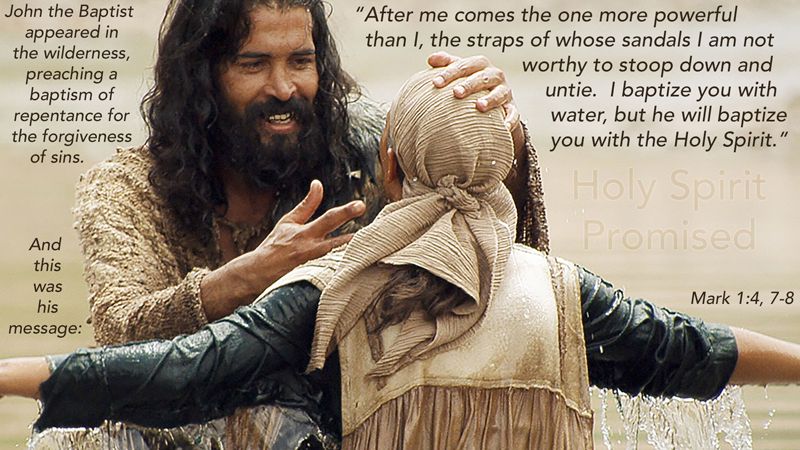
Matthew 3:11 he who is coming after me is mightier than I, whose sandals I am not worthy to carry

Mark 1:7 After me comes he who is mightier than I, the thong of whose sandals I am not worthy to stoop down and untie

Luke 3:16 he who is mightier than I is coming, the thong of whose sandals I am not worthy to untie; he will baptize you with the Holy Spirit and with fire.

John 1:27 even he who comes after me, the thong of whose sandal I am not worthy to untie.
 

Acts 13:25 after me one is coming, the sandals of whose feet I am not worthy to untie.

Now any text repeated in all of the gospels (and the book of Acts too) must have a grand significance. Most people will see it as illustrating the humility of the Baptist, unworthy to untie the sandals of the Lord, but several internal hints point to a deeper, more profound answer.

Schokel points out three textual clues:
 

1) In John 1:30 the Baptist speaks of Christ as, "This is he of whom I said, `After me comes a man who ranks before me, for he was before me.'" The word translated as "man" here is not the Greek word "anthropos" usually translated as man, instead it is "aner" a word, as Schokel points out, having more of a "sexual" (in the sense of gender) or relational meaning. It isn't man, but "male" (maschio in Italian); a male in relation to a female. The passage would better be translated in English, "After me comes a male who ranks before me." [John the Baptist is the "anthropos" - see John 1:6, 3:27]. Schokel also points out the references in John 1-3 to Isaiah 40-66, esp. chapter 54:1-10, where Yahweh is referred to as the Bridegroom/husband and in the LXX, the "aner")
 

2) At least in the synoptics the word "unworthy" or "unfit" has a juridical sense. That word is "ikanos" while John uses "axios." So it seems to be more of unfitness according to some type of Judaic law, and with the use of "aner" possibly a marital law.
 

3) Looking a few chapters down, we come to the last words of John recorded in the gospel. In responding to questions as to who this Jesus is, he responds, "You yourselves bear me witness, that I said, I am not the Christ, but I have been sent before him. He who has the bride is the bridegroom; the friend of the bridegroom, who stands and hears him, rejoices greatly at the bridegroom's voice; therefore this joy of mine is now full" (John 3:28-29). John here is challenging Israel's Messianic expectations - they expect their Christ to come as a political leader, or a warrior, or even a prophet like John the Baptist, but John says this is incorrect. He says that the messiah will come as the Bridegroom of his bride Israel; ultimately that Israel has the wrong expectations.
 

So keeping all of this in mind: the repeated reference to untying of sandals, the "maleness" of Christ, the juridical context, and the spousal-messianism John uses to describe the Christ, Schokel (along with the Fathers) exegetes this text in light of the Levirate Law in the Old Testament.
 

The Levirate Law (derived from Latin levir, meaning "a husband's brother") is the name of an ancient custom ordained by Moses, by which, when an Israelite died without issue, his surviving brother was required to marry the widow, so as to continue his brother's family through the son that might be born of that marriage (Gen 38:8; De 25:5-10 ) comp. (Ruth 3:1 4:10) Its object was "to raise up seed to the departed brother."

But if the surviving brother refused (for whatever reason) to marry the widow, a rite called "Halizah" would occur. Deut 25:5-10 describes the Levirate and Halizah:

"If brothers dwell together, and one of them dies and has no offspring, the wife of the dead shall not be married outside the family to a stranger; her husband's brother shall go in to her, and take her as his wife, and perform the duty of a husband's brother to her.

And the first son whom she bears shall succeed to the name of his brother who is dead, that his name may not be blotted out of Israel. And if the man does not wish to take his brother's wife, then his brother's wife shall go up to the gate to the elders, and say, `My husband's brother refuses to perpetuate his brother's name in Israel; he will not perform the duty of a husband's brother to me.' Then the elders of his city shall call him, and speak to him: and if he persists, saying, `I do not wish to take her,' then his brother's wife shall go up to him in the presence of the elders, and pull his sandal off his foot, and spit in his face; and she shall answer and say, `So shall it be done to the man who does not build up his brother's house.' And the name of his house shall be called in Israel, The house of him that had his sandal pulled off" (Deuteronomy 25:5-10).

The sandal is the key - the sandal is symbolic of he who has the right to marriage. The one who wears the sandal is the Bridegroom. As St. Cyprian said, this is why both Moses (Ex 3:2-6) and Joshua (John 5:13-15) were told by Yaweh that they had to remove their sandals; although they might have been prophets, they were not the one who had the right to marry Israel the Bride. In saying that he is not fit (juridically) to remove the sandal from Jesus' foot he is saying that Jesus is the bridegroom, he is the one who has the right to marriage, not John - even though he came first.

"Even though he came first" - John admits to this, being the precursor of the Messiah-Bridegroom, but he is not the one that will marry the bride (as he is not the Messiah, as some of the Jews had thought). To understand this better (and the entire Levirate process) one must look to the book of Ruth. In it, the widow Ruth is set to marry her "next of kin" via the levirate law, but Boaz arrived first to claim Ruth. It does not matter though, the next of kin has first choice. But he decides to pass up the marriage to Ruth, and gives her to Boaz. And in doing so he "drew off his sandal" (Ruth 4:8). Even though John came first, Jesus is the one with the right to the woman, and he opts for the marriage - and thus does not remove his sandal. John will not be given the chance to take his place.

This interpretation of these passages are not new, as Schokel points out. Several of the Fathers, including Jerome, Cyprian, and Gregory all see the Levirate law being referred to in the passages about John the Baptist. As Jerome writes, "being as that Christ is the Bridegroom, John the Baptist is not merited to untie the laces of the bridegroom's sandal, in order that, according to the law of Moses (as seen with Ruth) his house will not be called "the house of the un-sandaled," [a reference to the refusal to carry on the name of the deceased brother].

So, if John is not the messiah-bridegroom, and is unfit to untie the bridegroom's sandals, as the "friend of the groom" - what is his duty, esp. in the Levirate context? The root of his mission "to prepare the way of the Lord" can be found in Ruth 3:3 when the elders tell Ruth before her wedding to "Wash therefore and anoint yourself, and put on your best clothes." John's baptism of repentance is done to prepare the bride for the wedding.

Liturgically, he cleans her from her impurities (see also Ezekiel 16) preparing the bride "that he might sanctify her, having cleansed her by the washing of water with the word" (Ephesians 5:26). To prepare Israel the Bride for her nuptial with Christ her bridegroom is the heart of the Baptist's mission.

Now with all symbolism and typologies, it is hard to "stretch" the analogy too far. But in order to get the full meaning of Christ's fulfillment of the Old Testament, one has to twist symbols around a bit. In order to do understand one other crucial aspect of the Levirate, that of the "deceased" brother, we must be a bit creative, and look at it from a different perspective. Christ marries his bride, consummates his union with her, on the cross (see Eph 5) - but this leads to his death. So he could be seen as the "dead husband." So who will be the "brother" who takes his place in marrying his bride? For the answer we must again turn to the gospel of John.

"When Jesus saw his mother, and the disciple whom he loved standing near, he said to his mother, 'Woman, behold, your son!' Then he said to the disciple, 'Behold, your mother!' And from that hour the disciple took her to his own home" (John 19:26-27).

Jesus had no other brothers, so he gave his mother to John - and thus in becoming her son, John (and all apostles and Christians likewise) became Jesus' brother. But we cannot forget that on a different level (see Rev 12) Mary is the "icon of the church," the bride - so John as he becomes Jesus' brother, is given to the Church as her bridegroom. Here we have what Schokel says might be seen as the "root of apostolic succession." The Church is passed on from brother/apostle to brother/apostle - yet the bride still keeps the name of her first husband, as Paul writes, "Is Christ divided? Was Paul crucified for you? Or were you baptized in the name of Paul?" (1 Corinthians 1:13). The name of the husband is carried on by the generation of new sons, thus the brother through his preaching of the word, causes the bride to become fruitful. Look to St. Paul (a Jew well versed in the Law) again, "For though you have countless guides in Christ, you do not have many fathers.

For I became your father in Christ Jesus through the gospel" (1 Corinthians 4:15). The bishops/apostles have their charge to carry on the name of Christ by preaching the gospel and celebrating the sacraments - and in doing so the church/bride becomes church/mother and the Levirate law is thus fulfilled in Jesus Christ.